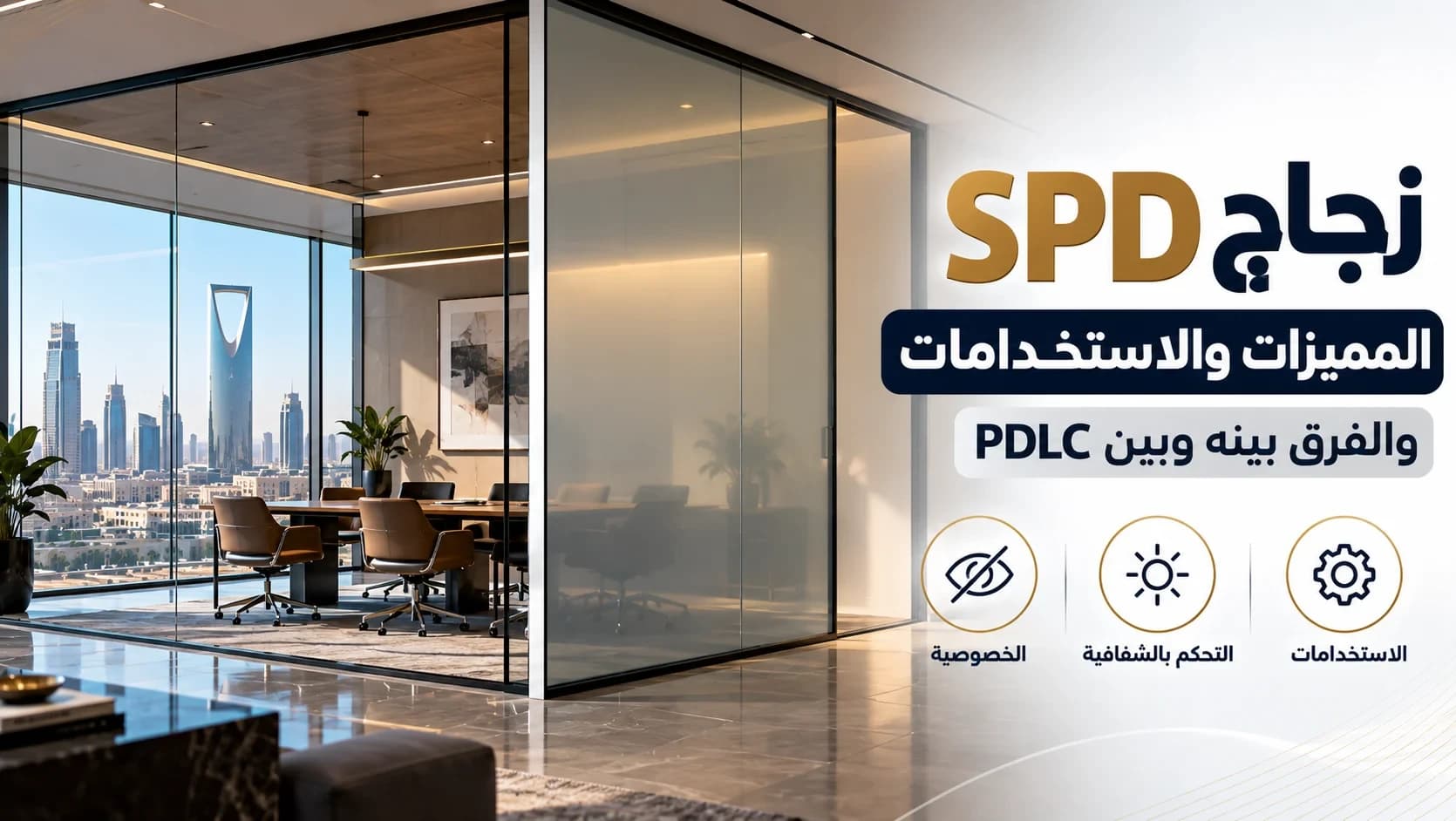
SPD glass is one of the modern technologies that help control light, glare, and solar heat through glass systems that can change their tint electronically. Its importance lies in creating a more comfortable environment inside vehicles, buildings, and spaces exposed to direct sunlight, with the ability to adjust the tint level as needed. However, choosing this technology requires understanding how it works and how it differs from other types of smart glass, particularly glass based on PDLC technology. In this guide, we explore what SPD glass is, its key features and applications, the limitations to consider before purchasing, and how to determine the right technology for your home or office.
What Is SPD Glass?
SPD glass is smart glass that uses a technology known as Suspended Particle Device (SPD). This technology relies on a special layer containing microscopic particles suspended in a suitable medium, typically integrated between layers of glass or other transparent materials. When the electrical system is switched on, the particles change their alignment, allowing more light to pass through. When the voltage is reduced or switched off, the layer becomes more effective at absorbing light, depending on the product design. This allows the tint level to be adjusted instead of relying on permanently tinted glass or traditional curtains. The actual optical results vary according to the product and its specifications.
How Does SPD Glass Work?
SPD glass operates through the response of microscopic particles to an electric field, allowing the amount of light transmitted through the glass to change. When an electrical voltage is applied, the particles align more closely, allowing more light to pass through. When the voltage is removed in common systems, the particles become more randomly distributed, reducing visible light transmission and making the glass appear darker.
Adjusting the Tint Level
One of the technology's main features is the ability to select multiple tint levels rather than being limited to just two states. Some systems can be operated using a switch, control unit, or sensors linked to light intensity. Response speed and the maximum and minimum transparency levels depend on the specifications of the installed system. Therefore, it is advisable to review the product's technical data sheet before making a purchasing decision.
What Are the Benefits of SPD Glass?
The main benefit of SPD glass is its flexible control over sunlight, particularly in spaces where glare needs to be reduced while maintaining visibility through the glass. Potential benefits include:
Adjusting the tint level according to lighting conditions and user requirements.
Reducing glare caused by direct sunlight.
Helping limit solar heat gain, depending on the product specifications and the glass used.
Supporting manual or automated control systems in certain applications.
Reducing the need for some traditional shading solutions that completely block the view.
Supporting modern architectural designs that incorporate large glass surfaces.
However, these benefits should not be considered guaranteed to the same extent in every product. Thermal performance depends on the glass assembly, the layers used, the orientation of the façade, and the surrounding climate.
Where Is SPD Glass Used?
SPD glass has a range of applications because it can adjust its tint level as needed. Its most notable uses are in sectors that require variable control over light and glare.
Cars and Transportation
SPD technology is used in some panoramic roofs, windows, and vehicle shading systems to improve comfort and reduce sunlight intensity. Depending on the product's properties and usage conditions, it may also help reduce heat buildup inside the vehicle cabin.
Buildings and Offices
The technology can be incorporated into certain windows, façades, and glass roofs, particularly in areas exposed to sunlight. Adjustable tinting helps improve lighting conditions while taking thermal insulation requirements and architectural design into account.
Hotels and Luxury Spaces
SPD technology may be used in projects that require a modern glass appearance and flexible lighting control. However, the choice should be based on the function of the space. If the priority is to block visibility between people, PDLC-based glass may be a more suitable option.
What Is the Difference Between SPD Glass and PDLC Smart Glass?
Although both technologies use electricity to change the optical properties of glass, they operate differently and serve different primary purposes. SPD glass focuses on gradual tint adjustment and light transmission, while PDLC technology uses light scattering to switch the glass between a transparent state and a visually opaque, milky-white state.
In common PDLC systems, the glass becomes transparent when the power is switched on and changes to a light-scattering state when the power is switched off. This makes the technology suitable for interior partitions, meeting rooms, and clinics that require instant privacy. SPD, on the other hand, is suitable for applications where controlling glare and light while maintaining an external view is a priority.
Therefore, neither technology is universally better than the other. The right choice depends on the intended function, product specifications, and installation method.
What Are the Disadvantages of SPD Glass, and What Should You Consider?
Despite its advantages, there are several important considerations before investing in SPD glass. First, its cost varies depending on the glass area, technical specifications, control system, manufacturing process, and installation method. Therefore, a standard price cannot be determined without knowing the project's specific requirements. In addition, tinting does not necessarily provide complete visual privacy. Objects or silhouettes may still be visible under certain conditions, depending on the tint level and surrounding lighting.
It is also important to verify power consumption, operating requirements, warranty coverage, maintenance availability, and spare parts. If the project is located in a very hot region, such as Saudi Arabia, the thermal performance data for the entire glass system should be reviewed rather than relying solely on the glass tint. You should also ensure that the electrical system complies with applicable safety and installation requirements.
How Do You Choose the Right Smart Glass for Your Project in Saudi Arabia?
The selection process begins by identifying the problem you want to solve. If you are looking to control glare and reduce sunlight while maintaining an external view, SPD technology may be worth considering. However, if you need interior glass partitions to switch from transparent to visually opaque for privacy, PDLC technology may be more suitable.
Before making a decision, consider the following factors:
Primary purpose: Is the main goal solar shading or visual privacy?
Glass area and location: Consider the panel dimensions, placement, and level of sun exposure.
Documented performance specifications: Review the manufacturer's data on light transmission and thermal performance.
Electrical and control requirements: Consider power supply, control systems, and maintenance.
Total cost: Account for the product, installation, and warranty.
Compatibility: Ensure the solution suits the architectural design and intended use.
These steps help you choose a practical solution rather than relying on the technology's name alone. They also reduce the likelihood of paying extra for features your project does not need.
Discover Smart Glass Solutions for Your Space with SmartVue
If you are planning to upgrade your home, office, or commercial project, identifying the right technology is the first step toward achieving your desired results. SmartVue specializes in supplying and installing PDLC-based smart film in Saudi Arabia. This solution can transform existing glass into a surface that provides privacy when needed, without requiring complete glass replacement in suitable applications.
Contact the SmartVue team to discuss your project requirements, determine whether smart privacy film is suitable for your space, and request a site assessment and quotation based on your installation needs.
Frequently Asked Questions About SPD Glass
Does SPD Glass Provide Complete Privacy?
Not necessarily. Its primary function is to control light transmission and tint while potentially maintaining an external view. If complete visual privacy is your priority, it is best to evaluate PDLC solutions and their specifications.
Does SPD Glass Help Reduce Solar Heat?
It can help reduce solar heat gain and glare, but the extent of its impact varies depending on the product, glass assembly, and surrounding conditions. Review the thermal performance data before purchasing.
Can SPD Glass Be Controlled with the Press of a Button?
Yes. Many systems support electrical control through switches or control units. Automated options and sensors may also be available, depending on the system design.
What Is the Difference Between SPD and PDLC Glass?
SPD allows the tint level to change to control light and glare, while PDLC switches the glass between transparent and light-scattering states to provide privacy. The right choice depends on the intended application.
Does SmartVue Offer SPD Glass Installation?
SmartVue specializes in smart film solutions based on PDLC technology. Contact the company to identify an available solution that suits your project's requirements, particularly if your goal is to achieve instant privacy using your existing glass.