
Smart Film, also known as switchable film or privacy film, has become one of the most advanced solutions for transforming traditional glass into smart glass with instant privacy control. It is widely used in offices, luxury villas, hospitals, hotels, meeting rooms, and commercial spaces because it combines modern design with practical functionality.
One of the most common questions people ask before installing this technology is: How much electricity does smart film consume? Is smart glass safe for long-term use?
Smart Film works using PDLC (Polymer Dispersed Liquid Crystal) technology, which allows the glass surface to switch between transparent and opaque states with the touch of a button. Although it depends on electricity to operate, its energy consumption is very low compared with many other smart systems.
Smart Film Electricity Consumption: Does It Increase Energy Bills?
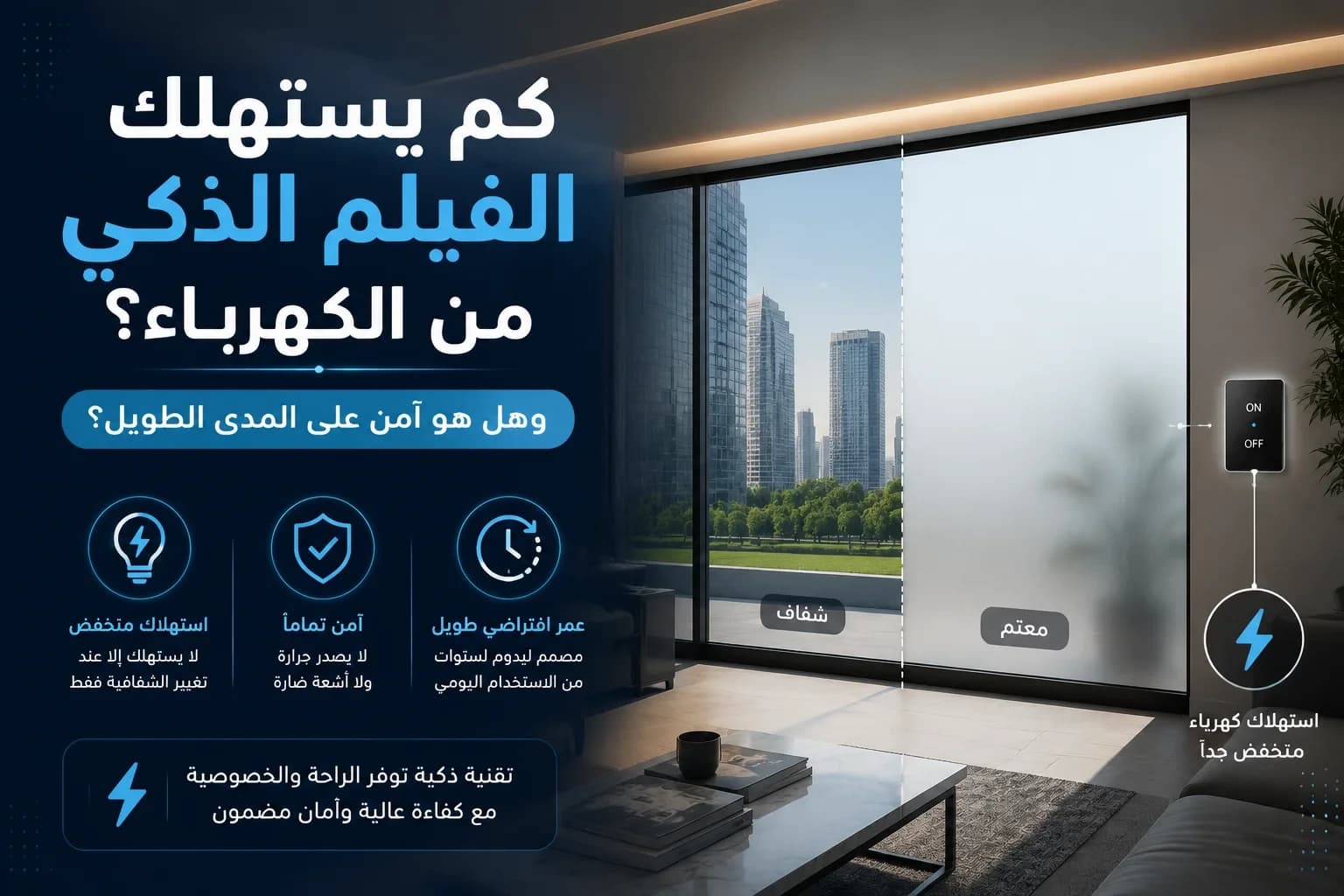
The electricity consumption of smart film is one of its biggest advantages. Unlike many electronic solutions that require continuous power, Smart Film only consumes electricity when it is switched to the transparent mode.
Most PDLC smart films consume approximately 5 watts per square meter during operation, making them highly energy-efficient compared with traditional solutions such as electric blinds or mechanical privacy systems.
For example, installing smart film on an area of 10 square meters requires a very small amount of power, similar to the consumption of a small lighting device.
The main benefits related to smart film electricity consumption include:
Low power usage during operation.
No continuous electricity consumption when the film remains in privacy mode.
Compatibility with smart home systems for automated control.
Reduced heat and UV radiation entering indoor spaces.
Smart Film can also contribute to better indoor energy efficiency by reducing solar heat gain and helping decrease cooling requirements, especially in hot climates.
How Does Smart Glass Electricity Work?
Understanding smart glass electricity starts with understanding how PDLC technology works.
Smart Film contains millions of liquid crystal particles placed inside a polymer layer. When there is no electrical current, these particles are randomly arranged and scatter light, making the glass appear frosted or opaque.
When electricity is applied, the liquid crystals align in one direction, allowing light to pass through and making the glass transparent within a fraction of a second.
Unlike mechanical systems, Smart Film does not rely on motors or moving parts. Electricity is only used to change the arrangement of the liquid crystals inside the film.
Does Smart Film Need Electricity All the Time?
A common question is whether Smart Film must remain connected to electricity continuously.
The answer depends on the required operating mode. When the film is switched to transparent mode, it requires electrical power. However, when it returns to the privacy mode, many PDLC systems consume little to no electricity.
This makes Smart Film an efficient solution for buildings that need flexible privacy without high operating costs.
Is Smart Glass Safe for Long-Term Use?
Many customers ask: Is smart glass safe?
The answer is yes, when high-quality materials are used and the installation is performed correctly by experienced professionals.
Smart Glass systems operate using low-voltage electrical components, making them suitable for residential, commercial, and healthcare environments when installed according to safety standards.
The safety and reliability of Smart Film depend on several important factors:
Using a suitable electrical transformer.
Protecting electrical connections from moisture.
Professional installation without damaging the film layers.
Following proper maintenance instructions.
Choosing an experienced Smart Film supplier is essential because incorrect installation can affect performance and reduce the expected lifespan of the system.
Smart Film Lifespan: How Long Does It Last?
The lifespan of smart film depends on product quality, installation standards, operating conditions, and maintenance practices.
High-quality PDLC Smart Film can provide reliable performance for many years. In many commercial applications, the expected lifespan can reach approximately 10 years or more when the system is properly maintained.
Several factors can help extend the life of Smart Film:
Avoiding direct exposure of electrical components to water.
Cleaning the surface using suitable materials.
Avoiding sharp objects that may damage the film.
Using professional technicians for repairs or adjustments.
A reliable supplier should also provide a written warranty that covers manufacturing defects and system performance according to the agreed terms.
Smart Film Maintenance: Does It Require Special Care?
One of the advantages of Smart Film is that smart film maintenance is simple compared with traditional privacy solutions.
Since Smart Film has no mechanical moving parts, it requires minimal maintenance.
Recommended maintenance practices include:
Cleaning the surface with a soft microfiber cloth.
Avoiding strong chemical cleaners.
Checking electrical connections if performance issues appear.
Preventing continuous moisture exposure around the edges.
If the film stops working properly, the issue is often related to the transformer, wiring, or electrical connections rather than the film layer itself.
Professional inspection is recommended instead of attempting random repairs that may damage the system.
Does Smart Film Save Energy Despite Using Electricity?
Although Smart Film requires electricity to switch between transparent and opaque modes, its benefits go beyond privacy.
Smart Film helps control natural light and reduce solar heat entering indoor areas. This can improve comfort and potentially reduce dependence on air conditioning, especially in buildings exposed to strong sunlight.
Modern PDLC films can block a significant percentage of UV rays and help improve indoor environmental efficiency, making them suitable for sustainable building designs.
Smart Glass Warranty: What Should You Know?
The smart glass warranty is an important factor when choosing a Smart Film provider.
A reliable warranty gives customers confidence in product quality and installation standards.
Warranty coverage may include:
Manufacturing defects.
Electrical operation issues caused by the product.
Technical support during the warranty period.
Warranty terms vary between suppliers, so customers should always choose companies that provide clear written warranty documents and after-sales support.
Why Choose Smart Vue for Smart Film Installation in Saudi Arabia?
Choosing the right Smart Film provider is essential to ensure long-term performance, safety, and quality.
Smart Vue specializes in Smart Film and PDLC Film solutions in Saudi Arabia, providing customized installations for offices, villas, healthcare facilities, hotels, and commercial projects.
With professional installation, technical support, and warranty services, Smart Vue helps customers transform traditional glass into advanced smart glass solutions that provide privacy, comfort, and modern aesthetics.
Contact Smart Vue today to receive a consultation and discover the best Smart Film solution for your project.
Frequently Asked Questions About Smart Film and Smart Glass
How much electricity does Smart Film consume?
Smart Film typically consumes around 5 watts per square meter during operation, making it one of the most energy-efficient privacy solutions available.
Is smart glass safe for homes and offices?
Yes. Smart glass is safe when high-quality products are installed correctly with proper electrical components and professional installation.
What is the lifespan of Smart Film?
The lifespan of Smart Film depends on quality and usage conditions, but high-quality PDLC films can last around 10 years or more with proper maintenance.
Does Smart Film require regular maintenance?
Smart Film requires minimal maintenance. Regular cleaning and occasional electrical checks are usually enough to maintain performance.
Can Smart Film be installed on existing glass?
Yes. Smart Film can be applied to existing glass surfaces, allowing customers to upgrade their spaces without replacing the entire glass system.