
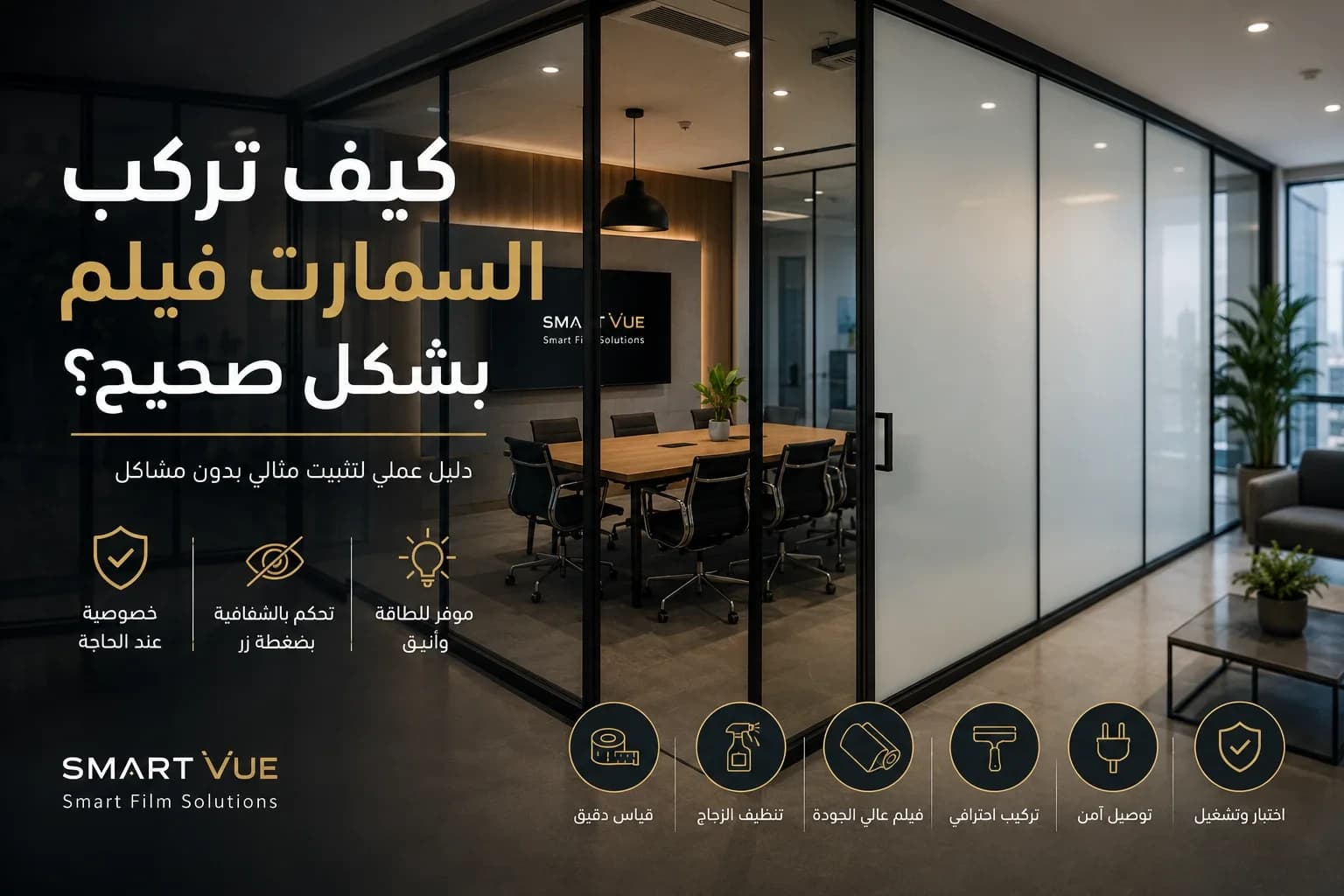
Smart film has become one of the modern solutions for providing instant privacy to glass without the need to replace it. However, achieving a professional result depends heavily on proper installation. If the film is applied to an unclean surface, installed in a way that creates wrinkles or bubbles, or connected to an unsuitable electrical system, both its appearance and performance may be affected. Therefore, installing smart film requires careful glass preparation, accurate measurements, suitable tools, and experience in handling PDLC film. In this guide, we explain the basic installation steps, the mistakes to avoid, and when it is best to hire a professional technician.
What Is Smart Film and How Does It Work?
Smart film, also known as privacy smart film, is a PDLC film that can be applied to existing glass and changes its appearance when connected to electrical power. When powered on, the film becomes more transparent, while switching off the power changes it to an opaque state to provide privacy when needed. This feature makes it suitable for offices, meeting rooms, villas, clinics, hotels, and other spaces that require privacy control without traditional curtains. Since it is an electrical product installed on glass, proper installation combines film application, electrical connections, and final testing.
What Do You Need Before Installing Smart Film?
Before starting the installation, you should ensure that the film size matches the glass area to be covered and prepare the work surface and necessary tools. Preparation typically includes measuring and cutting tools, glass cleaning materials, a lint-free cloth, and a suitable squeegee for removing air during application. The film should also be handled with great care and should not be bent or creased, as this may cause permanent damage. For large glass surfaces, having more than one technician can help move, align, and install the film safely and accurately.
Smart Film Installation Step by Step
Cleaning the Glass and Measuring the Area
The process begins by thoroughly cleaning the glass and removing dust, oils, and any residue that could prevent even adhesion. The area should then be measured accurately and the film dimensions determined before cutting, while following the manufacturer’s instructions and required edge clearances. The glass must be completely dry before application begins, as moisture or dirt trapped beneath the film may cause adhesion problems, bubbles, or visible defects after installation.
Applying the Film and Removing Air Bubbles
After preparing the surface, the film is carefully aligned with the glass. The protective liner is then gradually removed while the film is applied to the surface. A squeegee is used to smooth the film and push air out from beneath the layer. It is generally better to work gradually rather than removing the entire protective liner at once. If a bubble appears, it should be handled carefully without using sharp tools that could scratch or puncture the film. Accuracy at this stage is essential for achieving a smooth surface and a professional appearance.
Connecting the Power and Testing the System
After the film is installed, the electrical connections are completed according to the product design and the specifications of the transformer and control unit. PDLC systems have electrical connection points along the edges of the film, so excessive pressure or bending in these areas should be avoided. The transition between transparent and opaque modes is then tested to ensure that the film responds correctly. The electrical work should be completed by a qualified professional, as specifications and voltage requirements vary depending on the product and system being used.
Common Mistakes When Installing Smart Film
Smart film installation may appear simple, but small mistakes can become clearly visible after the work is completed. Some of the most common problems include insufficient glass cleaning, leaving dust beneath the film, cutting the film inaccurately, or attempting to install a large surface without sufficient experience. Bending the film or applying pressure to the electrical connection areas may also cause damage. Another important mistake is ignoring the manufacturer’s instructions for storage, installation, and cleaning, as PDLC products may differ in their installation requirements. Therefore, one installation method should not be applied to every type of smart film.
How to Maintain Smart Film After Installation
Maintaining smart film begins with handling it correctly after installation. The manufacturer’s instructions regarding the initial protection or curing period should be followed, and sharp tools or excessive pressure on the film surface should be avoided. When cleaning the film, it is best to use tools and materials compatible with the product recommendations rather than cleaners or methods that could affect the adhesive layer or edges. The electrical connections and control unit should also be checked if there is a problem with switching between modes. For commercial projects, regular technical inspections can help identify potential issues at an early stage.
Can You Install Smart Film Yourself or Do You Need a Professional?
In practice, installation difficulty can vary depending on the size of the glass, the type of film, and the connection method. However, professional PDLC installation requires a high level of accuracy, especially for large surfaces and electrical connections. Mistakes in surface cleaning, alignment, or handling the connection areas can directly affect the appearance and performance of the film. Therefore, if the project involves multiple glass panels or an electrical control system, it is generally best to work with a specialized team experienced in installing smart privacy films. At SmartVue, the service begins with inspecting and measuring the glass, identifying project requirements, and then completing installation, system testing, and user training.
Book Your Free Site Survey for Smart Film Installation with SmartVue
If you are considering installing smart privacy film in your home, office, or commercial project, a preliminary site survey can help determine the measurements, installation method, and suitable electrical connection locations before work begins. SmartVue provides PDLC smart film solutions in Saudi Arabia, including site surveys, professional installation, system operation, and training on how to use the controls. The company also states that it has experience delivering a variety of residential and commercial projects across the Kingdom. You can contact the team to receive an assessment for your project and a quotation based on the required area and specifications.
Frequently Asked Questions About Smart Film Installation
Can Smart Film Be Installed on Existing Glass?
Yes. One of the main advantages of adhesive PDLC smart film is that it can be applied to existing glass without replacing the entire glass panel, provided that the glass surface is suitable and the film is prepared and installed according to the manufacturer’s instructions.
Can Air Bubbles Be Removed After Installing Smart Film?
Some air bubbles can be addressed during the application process using a suitable squeegee. However, the result depends on the cause of the bubble and the condition of the film. Preventing dust and air from becoming trapped during installation is therefore better than trying to correct the problem after the film has been fully applied.
Does Smart Film Installation Require Electricity?
Yes. Switchable PDLC film requires an electrical power source and a control unit to switch between transparent and opaque modes. The electrical connections should be completed according to the product specifications and transformer requirements, with a qualified technician handling the electrical work.
How Long Does Smart Film Installation Take?
Installation time varies depending on the number and size of the glass panels, site preparation, and the nature of the electrical connections. Therefore, there is no fixed installation period for every project. At SmartVue, the company states that the overall project journey from the site survey to final operation typically takes between 7 and 14 days, depending on project size, while the actual on-site installation time may vary from one project to another.
Can Smart Film Be Controlled Using a Mobile Phone?
Some smart film systems can be integrated with smart control systems and mobile applications. However, this depends on the control unit and components used in the project. For this reason, the preferred control method should be determined before installation to ensure compatibility with the selected system.