
Electronic glass solutions have become a modern choice for combining privacy with contemporary design in homes, offices, hotels, and clinics. Instead of relying on curtains or fixed partitions, you can use technologies that allow you to change the appearance of glass according to your needs. Electronic glass tinting methods vary depending on the technology used, the type of space, and the level of control you need over transparency and light. Smart Film is one of the leading solutions, allowing glass to switch from transparent to opaque at the touch of a button, without necessarily replacing the existing glass. In this guide, we explore the different tinting methods, how they work, their advantages, and the key factors to consider before choosing the right solution for your project.
What Are the Methods of Electronic Glass Tinting?
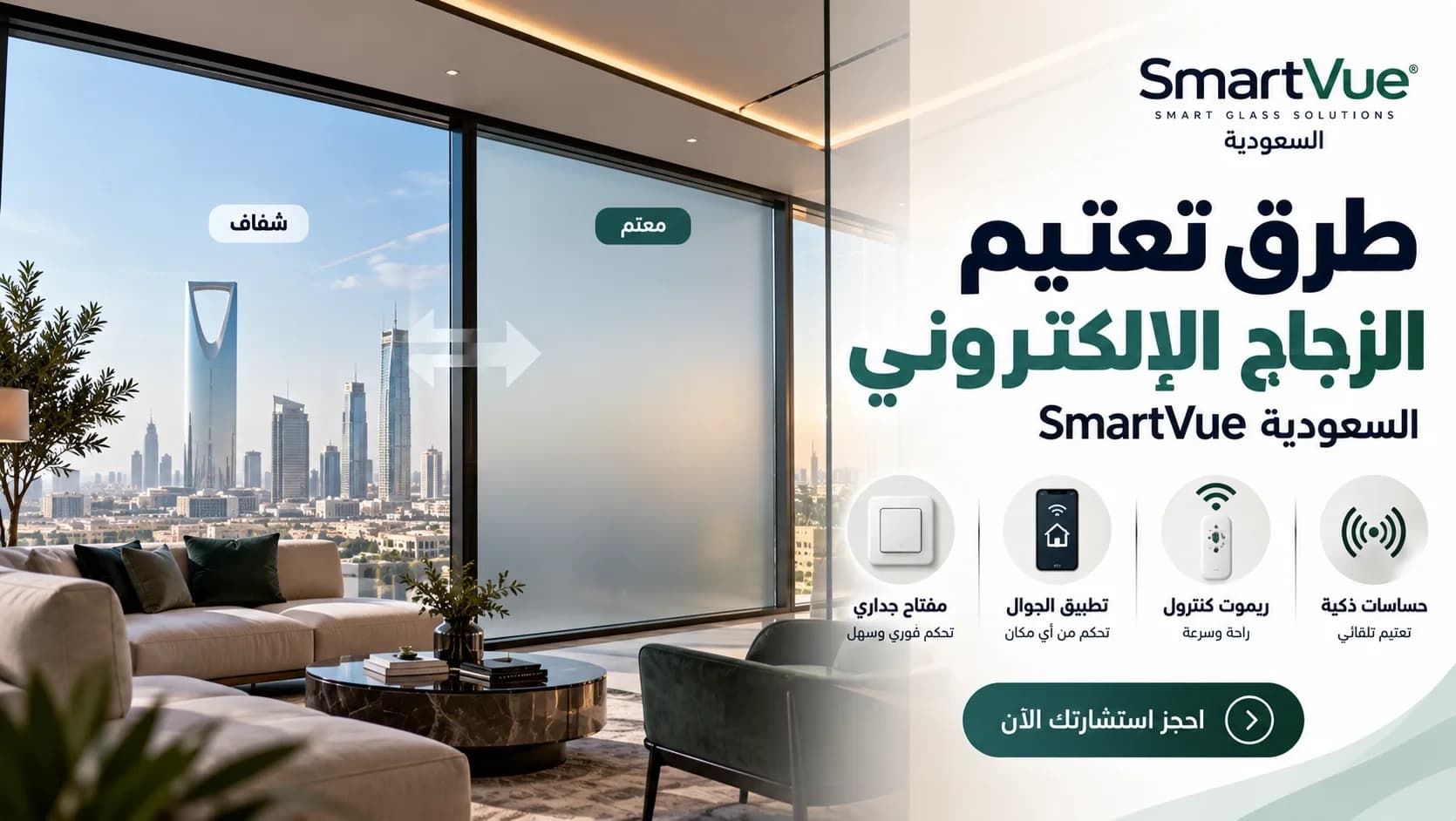
Electronic glass tinting methods refer to technologies that allow the optical properties of glass to change through an electrical control system. Their purpose is to provide privacy when needed while preserving clear visibility at other times. Unlike traditional frosted glass, which maintains the same appearance permanently, some of these systems can switch between two different states within a short time.
The most common options include:
Adhesive Smart Film installed on the surface of compatible glass.
Laminated Smart Glass containing an integrated electronic layer between glass panels.
Static privacy films that reduce visibility without electricity but do not provide instant switching between transparent and opaque states.
The right choice depends on the intended application, budget, and installation requirements. Therefore, it is important to define your privacy and tinting goals before making a decision.
How Does PDLC Smart Film Work?
PDLC, short for Polymer Dispersed Liquid Crystal, uses a layer containing microscopic liquid crystal droplets dispersed within a polymer material. The arrangement of these crystals affects how light passes through the film, allowing the glass appearance to change when electricity is applied.
When the Power Is Off
The liquid crystals remain randomly oriented, scattering light and making the glass appear milky white or frosted. This state provides visual privacy while still allowing some light to enter the interior space.
When the Power Is On
The liquid crystals align under the influence of an electric field, allowing light to pass through more directly and making the film transparent to a degree determined by the product specifications. The system can be switched on and off using a compatible switch or control device. Switching speed, transparency, and power consumption vary depending on the film specifications and the transformer used, so it is important to review the product's technical data before purchasing.
The Difference Between Smart Film and Smart Glass
Although the two terms are sometimes used to describe the same solution, there is an important difference between adhesive Smart Film and Smart Glass manufactured with the technology already integrated. Adhesive Smart Film is designed to be applied to an existing glass surface, making it a suitable option for some renovation projects that do not require replacing the entire glass panels.
Laminated Smart Glass, on the other hand, contains a PDLC layer integrated between glass panels during manufacturing and is installed as a complete glass unit. It may be suitable for new projects that require a seamless finish and electrical connections integrated into the design.
Before making a choice, the condition of the existing glass, its dimensions, installation method, and electrical connection locations should all be assessed. You should also ensure that the product is compatible with the installation environment, particularly in bathrooms and areas exposed to moisture. A technical assessment helps determine the most suitable solution for the project rather than relying on appearance alone.
How to Install Smart Film on Existing Glass
Installing Smart Film requires precision in measurement, handling the glass surface, and managing electrical connections. Although some products are designed for installation on existing glass, successful application depends on surface compatibility and following the manufacturer's instructions.
A professional installation typically involves the following stages:
Inspecting the glass, measuring its dimensions, and identifying the intended application requirements.
Cleaning and preparing the surface according to the product instructions.
Cutting the film to the required dimensions and applying it carefully to minimize bubbles and visual defects.
Connecting the film to a suitable electrical transformer and arranging the wiring safely.
Testing the transition between transparent and opaque states and confirming that the system operates correctly.
Electrical connections should be handled by a qualified technician, and the film should never be connected directly to the main power supply. Following the product-specific installation and maintenance instructions is also essential to achieve the best possible performance.
Advantages and Disadvantages of Smart Glass Before Installation
Smart Glass gives users greater flexibility in controlling privacy compared with traditional solutions. However, its practical requirements should be evaluated before installation. Key advantages include the ability to change the glass state when needed, maintain a modern appearance, and reduce reliance on curtains in certain applications. Some types of Smart Film can also be used for projection on glass when the system supports this function.
However, several factors should be considered:
The electrical system requires proper installation and a compatible power supply.
An opaque appearance does not necessarily mean that light or heat is completely blocked.
Reflections or visual inconsistencies may occur depending on the product and lighting conditions.
Certain environments, such as humid areas, require special attention to edges and electrical connections.
Purchase, installation, and maintenance costs vary according to the glass area and system specifications.
PDLC privacy film is also not automatically a complete replacement for blackout curtains. Shadows may remain visible under certain lighting conditions, so it is advisable to test a sample in the actual installation environment.
Smart Glass Control Methods Using a Switch or Smartphone
Smart Film systems offer several options for controlling transparency, and the right choice depends on the project size and how the space will be used. A wall switch provides straightforward control for offices and meeting rooms, while a remote control offers greater flexibility when managing multiple glass panels. Compatible systems can also be integrated with smartphone applications or smart home and building automation systems.
When selecting a control system, ensure that the transformer and control unit are compatible with the film. If required, confirm that individual panels can be controlled separately. Switch locations and wiring routes should also be planned before installation to avoid costly modifications later. Support for smart controls does not automatically mean that a product is compatible with every smart home system, so technical compatibility should be confirmed before finalizing the design.
Smart Film Prices and Factors Affecting Installation Costs
There is no single Smart Film price that applies to every project, as costs depend on the glass area, product specifications, installation method, and required control system. A project involving a single window may have different requirements from one covering glass facades or multiple meeting rooms.
Factors affecting the price include:
The total glass area and the dimensions of each panel.
The type of film, transparency level, and required optical performance.
The number of control units and transformers, as well as the length of the wiring.
Accessibility of the glass and the requirements for concealing wires.
Warranty coverage and the support and maintenance services provided.
For an accurate quotation, it is best to provide photos of the glass, approximate dimensions, and the project location, along with an explanation of the intended application. A technical inspection helps assess surface compatibility and identify the necessary requirements before a final quotation is issued.
Get the Right Glass Tinting Solution from SmartVue
If you are looking for a practical way to improve glass privacy in your home, office, or commercial project, SmartVue provides PDLC Smart Film solutions in Saudi Arabia, with inspection, supply, and installation services tailored to project requirements. Contacting the specialist team can help you determine whether your existing glass is compatible with the film, choose the appropriate control method, and understand the costs and warranty details before work begins.
Contact SmartVue at +966580403303 to request a technical inspection and identify the most suitable solution for your space. You can also visit the official website to explore the products and previous projects before making your decision.
Frequently Asked Questions About Electronic Glass Tinting Methods
How Can Transparent Glass Be Converted into Opaque Glass?
You can use PDLC Smart Film installed on compatible glass or choose Smart Glass with the technology integrated into the glass itself. The appropriate option depends on the condition of the existing glass and the project requirements.
Can Smart Film Be Installed on Existing Glass?
Yes, certain types of Smart Film can be installed on existing glass surfaces after confirming compatibility with the product and the installation requirements.
Does Smart Film Work Without Electricity?
In common PDLC systems, the film becomes opaque or frosted when the power is off and transparent when the power is on. The exact behavior depends on the product type.
Does Smart Film Block Heat and Sunlight?
Its ability to reduce ultraviolet radiation and heat varies according to the product specifications. You should not assume that all types of film provide the same level of thermal protection.
Can Smart Glass Be Controlled Using a Smartphone?
Yes, some systems support smartphone app control, provided that the necessary control units are available and compatible with the Smart Film system.
What Factors Determine the Cost of Smart Film?
The cost depends on the glass area, film type, wiring requirements, control system, and installation complexity. It is therefore best to request a customized quotation after defining the project requirements.