

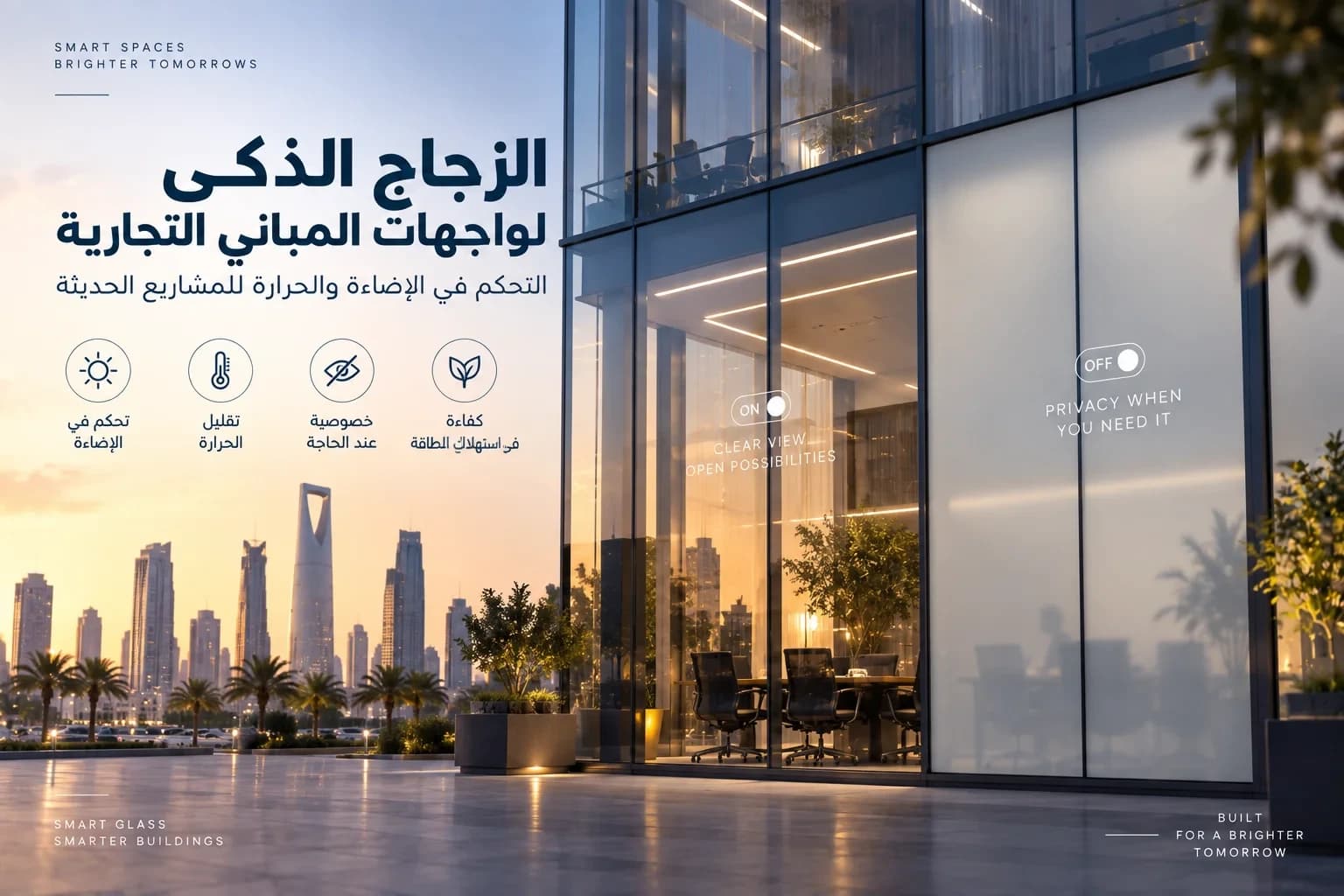
Glass facades have become an essential element in modern commercial building design. However, they can also increase the exposure of interior spaces to sunlight, glare, and solar heat gain. This is where smart glass for facades becomes an important solution, allowing certain optical properties of the glass to be controlled dynamically instead of relying solely on traditional shading solutions. The right technologies can help improve natural lighting while reducing glare and thermal loads, especially when integrated with the building’s control, lighting, and HVAC systems. Recent studies on office buildings in hot climates confirm that selecting the right smart glass and properly designing the facade can improve thermal performance and energy consumption.
What Is Smart Glass for Facades and How Does It Work?
Smart glass is a type of glass or glazing system that can change its optical properties in response to electricity, heat, or light, depending on the technology used. In commercial facades, these systems can be used to control the amount of light, glare, and solar energy entering the building. Some of the most common technologies include Electrochromic, SPD, and PDLC, each with different operating principles and characteristics. Electrochromic glass can gradually transition between clearer and darker states, while PDLC technology is known for rapidly switching between transparent and opaque states, making it particularly useful for privacy. Therefore, the technology should be selected based on the actual purpose of the facade rather than simply choosing a product labeled as "smart glass."
How Do Smart Glass Facades Control Lighting and Heat?
Smart glass facades function as part of the building envelope, allowing control over the amount of solar radiation and visible light reaching interior spaces. With Electrochromic systems, the tint level can be adjusted according to sunlight conditions or building requirements. This can help reduce glare and certain heat-gain loads while maintaining natural daylight and outdoor views. Field trials and performance evaluations have found that electrochromic windows can dynamically control light, glare, and heat within office spaces.
Light and Glare Control
Instead of keeping blinds closed throughout the day, dynamic glass can adjust light transmission according to operating conditions. This can help reduce glare on computer screens and improve the visual environment while allowing occupants to benefit from natural daylight when conditions permit.
Types of Smart Glass Suitable for Commercial Building Facades
The choice of glass depends on the intended function of the facade, as smart glass technologies do not offer identical performance. The main options include:
Electrochromic Glass: Suitable for gradual control of tint, solar heat gain, and glare, and commonly used in energy-efficient facade applications.
SPD Smart Glass: Allows the shading level to be changed quickly and is used in applications that require dynamic light control.
PDLC Smart Glass/Film: Known for its rapid transition between transparent and opaque states, making it more closely associated with privacy, space division, and visual control.
Thermochromic or Photochromic: These technologies change their properties in response to temperature or light rather than through direct electrical control.
Therefore, if the primary goal is to reduce solar heat gain through a commercial facade, PDLC should not automatically be considered an equivalent alternative to electrochromic glass.
What Are the Benefits of Using Smart Commercial Building Glass?
Smart commercial building glass can provide several benefits when the technology is properly selected and the system is appropriately designed. One of the main advantages is improved control over light and glare, which is particularly important in offices and buildings with large glazed areas. Dynamic glass can also help reduce solar heat gain and cooling loads under certain conditions while allowing the use of natural daylight instead of completely blocking windows. This is especially relevant in hot climates. A study of an office building in Cairo found that integrating electrochromic glass reduced solar heat gain by 77.47% and HVAC energy consumption by 50.95% in the simulation model compared with the conventional glazing used in the studied scenario.
How Can Electronic Shading for Facades Reduce Energy Consumption?
Electronic shading for facades can reduce the amount of solar radiation entering a building during periods of strong sunlight while allowing greater light transmission when outdoor conditions are more favorable. The benefits can be greater when the glazing system is connected to sensors, lighting systems, and HVAC controls so that shading does not operate independently from the building’s other systems. Research from Berkeley Lab indicates that electrochromic windows can be used to control daylight, solar heat gain, and glare and can be integrated with building systems to improve operational efficiency. A recent study in a hot and dry environment also found that integrating smart glass into an office facade can improve thermal comfort and reduce electricity consumption.
Smart Architectural Glass and Improving Indoor Comfort
The value of smart architectural glass is not limited to energy savings. Visual and thermal comfort are also important factors in commercial buildings where occupants spend long periods indoors. Large glass facades can provide views and natural daylight, but they may also create glare and increase thermal loads if they are not properly managed. Dynamic glass can help balance views, daylight, and protection from solar radiation. Evaluations of electrochromic windows in office environments have shown that users may prefer them over some conventional windows, while research indicates that facade orientation, glazing area, and control strategy are important factors influencing the final results.
How Do You Choose the Right Smart Glass for Your Commercial Project Facade?
The selection process should begin with an analysis of the project conditions rather than focusing solely on the technology. The facade orientation, glazing-to-wall ratio, local climate, level of solar exposure, privacy requirements, and the building’s existing HVAC and lighting systems should all be evaluated. It is also important to determine whether the main objective is rapid privacy control, glare reduction, solar heat gain reduction, improved natural lighting, or a combination of several functions. For large commercial projects, it can be beneficial to simulate facade performance before implementation, as research indicates that location, facade orientation, glazing ratio, and control strategy can significantly influence the results.
What Is the Difference Between Smart Glass and Traditional Facade Glass?
Traditional glass has relatively fixed optical and thermal properties, so controlling light and heat typically depends on additional elements such as blinds, louvers, or external shading systems. Smart glass, on the other hand, provides the ability to change certain properties depending on the technology and operating conditions. This gives designers greater flexibility in managing the facade, but it typically involves additional requirements related to cost, installation, control, and maintenance. Therefore, using smart glass does not automatically mean that a project will consume less energy. The outcome depends on proper design, product selection, control strategy, site climate, and integration with the building’s systems.
Request a Consultation to Determine the Best Solution for Your Commercial Facade
If you are planning a commercial project that relies on large glazed areas, selecting the right glass technology requires evaluating the function of the facade rather than its appearance alone. The SmartVue team can assess project requirements and determine whether PDLC Smart Film is the most suitable solution for privacy and visual control or whether another dynamic glazing technology would be more appropriate when the primary goal is managing solar heat gain, glare, and energy consumption. The company provides Smart Film solutions in Saudi Arabia for offices, meeting rooms, hotels, and commercial projects, along with site assessment, installation, and commissioning services.
SmartVue
Frequently Asked Questions About Smart Glass for Facades
What Is Smart Glass?
Smart glass is a glazing system that can change certain optical properties, such as transparency, tint level, or light transmission, depending on the technology used. Some of the most common technologies include Electrochromic, SPD, and PDLC, with each technology offering different primary functions.
Does Smart Glass Reduce Building Heat?
Some smart glass technologies, particularly systems designed to control solar heat gain such as Electrochromic glass, can reduce the amount of solar radiation entering a building and therefore help lower cooling loads. However, the level of energy savings depends on the climate, facade orientation, glazing area, control strategy, and building design.
Is Smart Glass Suitable for Commercial Buildings?
Yes, it can be used in offices, hotels, administrative buildings, and commercial spaces. However, the appropriate technology depends on the intended purpose. Some systems focus on energy and glare control, while others are better suited to privacy and rapid switching between transparent and opaque states.
What Is the Difference Between Smart Film and Smart Glass?
Smart Film is a film that can be applied to existing glass to convert it into a switchable glazing system, while smart glass may be a manufactured glass product with the technology integrated directly into the glazing unit. PDLC Film is particularly known for its rapid switching capability and ability to provide privacy when needed.
Can Smart Glass Be Controlled Automatically?
Yes, some systems can be connected to sensors and building control systems to adjust the tint level according to lighting conditions, solar radiation, or operating requirements. This type of integration helps make the facade part of the building’s overall energy, lighting, and HVAC management system.