

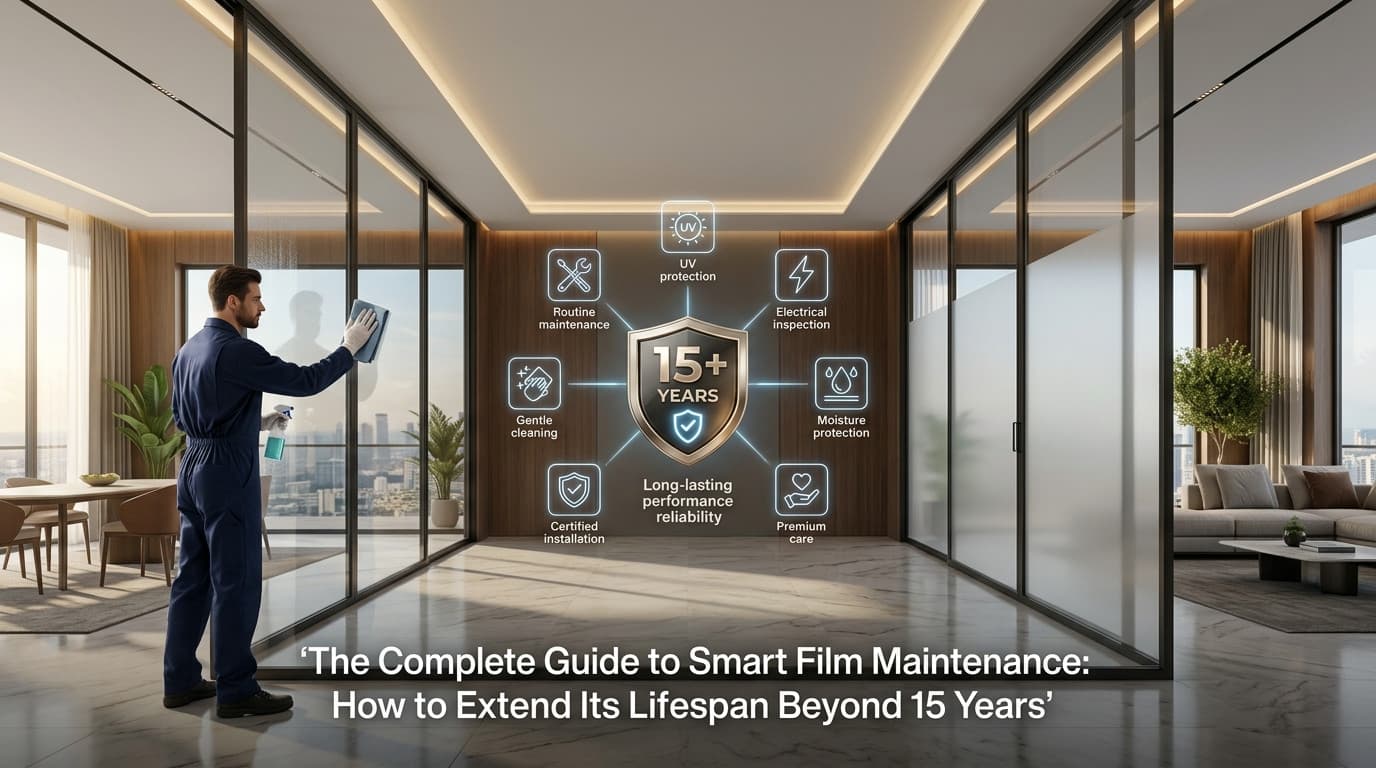
Smart Film has become one of the most popular smart glass technologies used in modern homes, offices, hospitals, clinics, hotels, and commercial buildings. It offers instant privacy, a sleek contemporary appearance, and intelligent control over glass transparency while allowing natural light to pass through. As the demand for this technology continues to grow, many property owners and facility managers are looking for the best practices for smart film maintenance and smart film care to ensure long-lasting performance.
Although Smart Film is engineered for durability, its lifespan depends greatly on proper installation, regular cleaning, routine inspections, and correct daily use. Following the manufacturer's maintenance recommendations can minimize the risk of damage, preserve the film's appearance, and ensure fast, reliable switching between transparent and opaque modes for many years.
In this comprehensive guide, you'll learn everything you need to know about smart film maintenance, the best methods for smart film care, common maintenance mistakes to avoid, and practical tips to help your Smart Film last for more than 15 years.
What Is Smart Film and How Does It Work?
Smart Film is an advanced electronic film based on PDLC (Polymer Dispersed Liquid Crystal) technology. It is installed directly onto glass surfaces, allowing users to switch the glass from transparent to opaque instantly using electricity.
When electrical current flows through the film, the liquid crystals align in the same direction, allowing light to pass through and making the glass transparent. When the power is turned off, the crystals scatter randomly, causing the glass to become opaque and provide immediate privacy.
Smart Film is commonly installed in:
Office meeting rooms
Residential homes and villas
Hospitals and healthcare facilities
Clinics
Hotels
Commercial buildings
Banks
Retail stores
Luxury showrooms
Smart Film Maintenance Why Is It Important?
Although Smart Film requires relatively little maintenance compared to traditional privacy solutions, routine care is essential for preserving its performance and extending its lifespan.
Proper smart film maintenance offers several benefits, including:
Maintaining fast switching speed.
Protecting the electronic layer from damage.
Reducing the likelihood of technical problems.
Preserving the elegant appearance of the glass.
Minimizing future repair costs.
Extending the overall lifespan of the system.
A well-maintained Smart Film system can continue operating efficiently for well over a decade.
Smart Film Care: Best Cleaning Practices
One of the most important aspects of smart film care is cleaning the glass correctly. Using unsuitable products or rough materials can damage the film's protective surface.
For safe and effective cleaning, it is recommended to:
Use a soft microfiber cloth.
Clean with a mild, non-abrasive glass cleaner.
Remove dust regularly.
Dry the glass after cleaning to prevent water spots.
Clean stains as soon as they appear.
These simple maintenance habits help preserve both the appearance and performance of Smart Film.
Which Cleaning Products Should You Avoid?
Certain cleaning products can gradually damage the protective layer of Smart Film.
Avoid using:
High-ammonia glass cleaners.
Strong chemical solvents.
High-concentration industrial alcohol.
Abrasive cleaning pads.
Metal blades or sharp tools.
Hard-bristle brushes.
Choosing gentle cleaning products significantly improves the durability of Smart Film.
How to Extend the Lifespan of Smart Film Beyond 15 Years
If you want your Smart Film to remain in excellent condition for many years, follow these recommendations:
Clean the film regularly.
Use only the original power transformer supplied by the manufacturer.
Never tamper with electrical wiring.
Protect the glass from direct impacts.
Schedule periodic inspections of the control unit.
Repair minor faults immediately.
Contact qualified technicians whenever maintenance is required.
These preventive measures help reduce unexpected failures and keep the system operating efficiently.
Does Smart Film Require Regular Maintenance?
Yes—but fortunately, the maintenance requirements are simple.
Routine inspections should include checking:
The electrical power supply.
The transformer.
The control unit.
Wiring and electrical connections.
Switching speed.
The condition of the surrounding glass.
Regular inspections help detect small issues before they develop into major problems.
Smart Film Care After Installation
The first few days after installation are critical to achieving the best long-term performance.
During this period:
Avoid cleaning the film until the adhesive has completely cured.
Do not press hard on the glass surface.
Never attempt to peel or lift the film edges.
Operate the system according to the installer's instructions.
Do not modify any electrical components.
Proper care immediately after installation contributes significantly to the film's longevity.
Common Mistakes That Reduce Smart Film Lifespan
Many Smart Film failures are caused by improper maintenance rather than manufacturing defects.
Common mistakes include:
Using harsh cleaning chemicals.
Cleaning with abrasive materials.
Exposing the glass to heavy impacts.
Attempting DIY electrical repairs.
Using non-original power supplies.
Ignoring regular maintenance.
Delaying repairs when small issues appear.
Avoiding these mistakes helps preserve the system and reduces maintenance costs.
Can Smart Film Be Repaired If It Is Damaged?
It depends on the source of the problem.
In many cases, electrical issues involving the transformer, wiring, or control unit can be repaired without replacing the Smart Film itself.
However, if the film has suffered mechanical damage, deep scratches, or internal layer failure, replacing the damaged section may be necessary.
For accurate diagnosis, always contact a qualified Smart Film service provider instead of attempting repairs yourself.
When Should You Contact a Smart Film Maintenance Company?
Professional service is recommended if you notice:
The film no longer switches on.
Slow transition between transparent and opaque modes.
Sections of the film stop working.
Damaged wiring.
Unusual sounds from the transformer or control unit.
Discoloration or visible defects on the film.
Addressing these issues early helps prevent larger system failures.
Why Does Professional Installation Affect Smart Film Lifespan?
Even premium-quality Smart Film will not perform properly if installed incorrectly.
Professional installation ensures:
Bubble-free application.
Even film alignment.
Secure electrical connections.
Stable operation.
Lower risk of future failures.
Choosing an experienced installer is one of the most important factors in maximizing the lifespan of Smart Film.
Can Smart Film Withstand Daily Use?
Yes.
Smart Film is designed for continuous daily operation in residential, commercial, and healthcare environments.
It can switch thousands of times without affecting its performance, provided that proper smart film maintenance and smart film care practices are followed.
How to Maintain Smart Film Performance in Commercial Buildings
In offices, hotels, hospitals, and other commercial environments, Smart Film often operates continuously throughout the day.
To maintain optimal performance:
Create a regular cleaning schedule.
Perform routine maintenance inspections.
Train maintenance staff on proper cleaning methods.
Inspect electrical components regularly.
Ensure a stable electrical power supply.
Preventive maintenance helps reduce downtime while extending the life of the system.
in the end Smart film maintenance begins the moment the system is installed and continues through proper cleaning, regular inspections, appropriate cleaning products, and careful daily operation. Fortunately, smart film care does not require complicated procedures, but it does require consistency and attention to detail.
By working with a professional installation company, following the recommended maintenance guidelines, and addressing minor issues before they become major repairs, your Smart Film system can continue operating efficiently for more than 15 years. This makes Smart Film a reliable, durable, and cost-effective investment for homes, offices, healthcare facilities, hotels, and commercial properties.
Frequently Asked Questions (FAQ)
Does Smart Film require regular maintenance?
Yes. Regular inspections of the electrical system, transformer, control unit, and routine cleaning help maintain optimal performance.
What is the best way to care for Smart Film?
Use a soft microfiber cloth together with a mild, non-abrasive glass cleaner. Avoid harsh chemicals and sharp cleaning tools.
How long does Smart Film last?
With proper smart film maintenance and smart film care, Smart Film can maintain excellent performance for more than 15 years.
Can chemical cleaners damage Smart Film?
Yes. Strong chemicals, especially cleaners containing high concentrations of ammonia, can gradually damage the protective surface of the film.
Can Smart Film be repaired if it stops working?
It depends on the cause of the issue. Electrical components can often be repaired, while severe physical damage may require replacing the affected section of the film.
Does Smart Film need to be replaced after several years?
Not necessarily. With proper maintenance and routine cleaning, Smart Film can continue operating efficiently for many years without replacement.
Does installation quality affect Smart Film lifespan?
Absolutely. Professional installation ensures optimal performance, minimizes future failures, and significantly extends the lifespan of the system.
Can Smart Film be used in high-traffic environments?
Yes. Smart Film is designed for continuous daily use in offices, hotels, hospitals, conference rooms, and other commercial environments while maintaining reliable performance when proper maintenance guidelines are followed.