
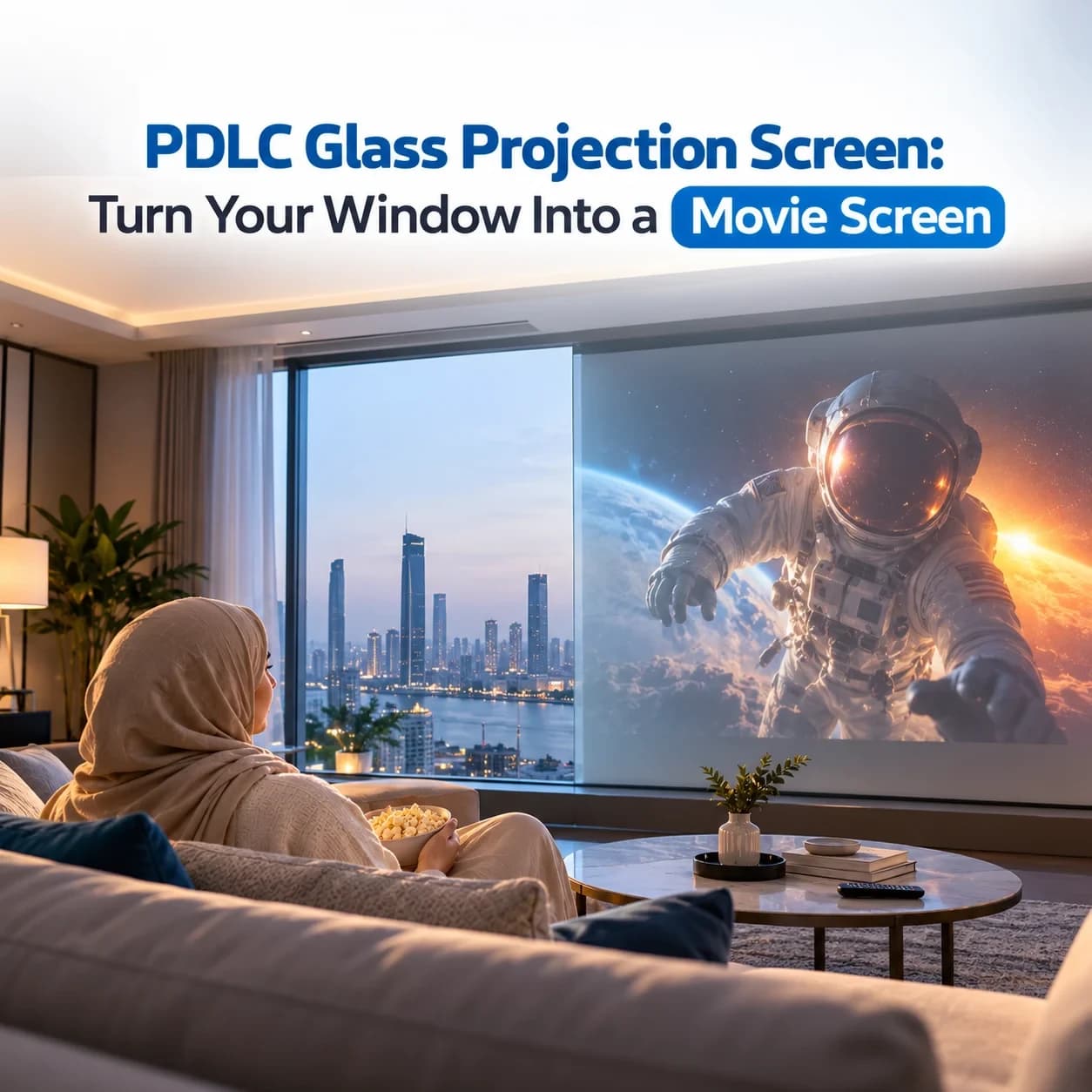
Imagine watching your favorite movies on a large living room window instead of a conventional television screen. With the right setup, this idea can become a practical feature of a modern home. PDLC glass technology allows a glass surface to switch between transparent and frosted states, making it useful for privacy and, with compatible projection equipment, visual displays. For homeowners who value minimalist interiors, this creates an opportunity to combine everyday functionality with home entertainment. In this guide, we explain how a PDLC glass projection screen works, what equipment you need, and how to determine whether this solution is right for your living room.
How PDLC Glass Works in a Living Room
PDLC stands for Polymer Dispersed Liquid Crystal, a technology that changes the way light passes through a glass surface. When electrical power is applied, the liquid crystals align, allowing the glass to become more transparent. When the power is switched off, the crystals scatter light, producing a frosted appearance.
This transformation makes PDLC glass useful in spaces where privacy and openness are both important. In a living room, the window can remain transparent when you want natural daylight and a clear outdoor view. When you want to watch a movie, the glass can switch to its frosted state and serve as a projection surface, provided the selected product is suitable for that application. The result is a flexible feature that complements contemporary interior design.
Can PDLC Glass Be Used as a Projection Screen?
Yes, certain PDLC glass and smart film products are designed to function as projection screens. When the surface becomes frosted, it scatters projected light so viewers can see the displayed image. However, not every privacy film delivers the same projection performance, so selecting a product specifically rated for projection is important.
A PDLC glass projection screen can be particularly useful when you want a large display without dedicating an entire wall to a television. It can also help preserve the clean appearance of a living room when the display is not in use. Before purchasing, ask the supplier about image contrast, haze, screen dimensions, and compatibility with your projector. These specifications will influence whether the finished setup meets your expectations for movie nights.
How to Turn a Living Room Window Into a Movie Screen
The first step is to assess your existing window and decide whether you need self-adhesive PDLC film or purpose-built switchable glass. Self-adhesive film may be suitable for certain existing glass surfaces, while integrated smart glass is generally considered during new construction or window replacement.
Next, determine the usable projection area, seating distance, and position of the projector. The screen should be large enough for comfortable viewing without forcing viewers to sit too close. You should also plan for electrical connections, safe cable routing, and convenient controls for switching the glass between its clear and frosted states.
Before installation, consult a qualified provider to confirm glass compatibility, electrical requirements, and the manufacturer's recommendations. Proper planning helps prevent avoidable installation issues and creates a more practical smart glass home theater.
Rear Projection vs. Front Projection on Smart Glass
Projector placement has a major influence on the finished experience. With rear projection, the projector sits behind the glass and the audience watches from the opposite side. This arrangement can keep equipment away from the seating area and reduce shadows caused by people walking in front of the beam. However, it requires sufficient space behind the window and a product designed to support rear projection.
Front projection places the projector on the viewing side, directing the image onto the glass surface. This can work in some configurations, but equipment placement and viewer movement may interfere with the image.
For a living room, rear projection may be attractive when the room layout allows it. Nevertheless, the best arrangement depends on the glass product, projector specifications, available space, and ambient lighting. Confirm the proposed setup with a specialist before committing to installation.
How Lighting Affects a PDLC Glass Projection Screen
Ambient light is one of the most important factors in home projection. Direct sunlight, bright windows, overhead lights, and reflective surfaces can reduce perceived contrast, making dark scenes appear washed out. Even a capable projector may struggle when the viewing environment is too bright.
For a better movie experience, plan to watch after sunset or control daylight with suitable window coverings elsewhere in the room. Adjustable lighting can help you create a comfortable viewing environment without making the living room permanently dark.
It is also worth remembering that frosted PDLC glass is not automatically equivalent to a dedicated cinema screen. Its optical characteristics vary by product, and some surfaces may produce a softer image than expected. Ask for a demonstration or sample projection under conditions similar to your home before choosing a system.
Choosing the Right Projector for a Smart Glass Home Theater
The projector should be selected according to the screen dimensions, room brightness, viewing distance, and intended content. Brightness, resolution, throw distance, and installation flexibility all affect the final result. A projector that works well in a dark media room may not provide the same experience in a bright, open-plan living room.
For rear projection, check that the projector can create the desired image size from the available distance behind the glass. Also consider ventilation, power access, mounting stability, and whether the equipment will remain discreet when not in use.
Do not choose a projector based on brightness alone. Image processing, resolution, lens quality, and the characteristics of the projection surface also matter. The most reliable approach is to test the projector with the intended PDLC product or obtain recommendations from a supplier familiar with projection applications.
Benefits and Limitations of PDLC Glass for Home Cinema
A well-planned smart glass home theater can offer several practical benefits. It combines an architectural feature with an entertainment function, helps preserve a minimalist appearance, and allows the glass to return to a transparent state when the display is not needed.
Key advantages include:
A flexible window that supports different uses throughout the day.
A large potential viewing area without a permanent television dominating the room.
Switchable privacy and a contemporary interior design.
Integration possibilities with compatible home automation systems.
There are also limitations to consider. PDLC glass requires an electrical supply and appropriate controls, while projection quality depends on the glass specification, projector, and room lighting. Installation can involve additional planning and expense compared with buying a conventional television. The window may also need to remain frosted during projection, meaning you temporarily lose the clear outdoor view. Evaluating these trade-offs before installation will help you make an informed decision.
Plan Your Smart Glass Home Theater With SmartVue
Turning a living room window into a movie screen starts with choosing the right technology for your space. SmartVue specializes in smart film and PDLC privacy solutions in Saudi Arabia, helping homeowners and businesses explore ways to make existing glass more functional. The suitability of a particular product for projection should be confirmed with the technical team before installation.
Visit the SmartVue homepage to explore the company's smart film solutions and learn more about its services. You can also contact the team at +966580403303 or email info@smartvue.co to discuss your window dimensions, room layout, projector placement, and intended use.
Ask for a technical assessment and, where possible, a projection demonstration using the proposed glass. This will help you understand the expected image quality, installation requirements, and overall project cost before moving forward.
Frequently Asked Questions
Can PDLC glass be used as a movie screen?
Yes. Compatible PDLC glass can function as a projection surface when switched to its frosted state. The actual image quality depends on the product's optical properties, projector, and lighting conditions.
Is PDLC glass suitable for a smart glass home theater?
It can be suitable when the selected product is designed for projection and the room allows appropriate projector placement and light control. A technical assessment helps determine whether it meets your viewing requirements.
Does PDLC glass work with a regular projector?
Potentially, yes. Compatibility depends on the projector's brightness, resolution, throw distance, and whether the setup uses front or rear projection. Test the intended combination before installation.
Can I install PDLC film on an existing living room window?
Some self-adhesive PDLC films are designed for installation on existing glass. The glass condition, dimensions, wiring access, and product specifications should be checked by a qualified installer first.
Is PDLC glass better than a traditional television?
Neither option is universally better. PDLC glass offers a distinctive architectural display and switchable transparency, while a television generally provides a more predictable viewing experience without projector placement or ambient-light challenges. The right choice depends on your budget, priorities, and room design.