
What You Need Before You Start
Before beginning the installation, make sure you have the following tools and materials ready:
Smart film roll (measured to your glass dimensions)
Glass cleaner (ammonia-free recommended)
Lint-free microfibre cloths
Spray bottle with clean water and a drop of dish soap
Sharp utility knife or film cutter
Straight edge or ruler
Squeegee or application card
Electrical tape and insulated connectors
Transformer/power supply unit (provided with the film)
Having everything prepared in advance makes the process smoother and reduces the risk of errors during application.
Smart Film Installation: Step-by-Step
Step 1: Prepare the Glass Surface
Start by cleaning the glass thoroughly. Remove all dust, grease, fingerprints, and residue using a quality glass cleaner and a lint-free cloth. Work in sections and ensure the surface is completely dry before moving on.
A perfectly clean surface is the single most important factor in a successful installation. Any contamination left on the glass will prevent the film from adhering properly and will cause bubbles or lifting over time.
Pro Tip: Avoid installing smart film in direct sunlight or on hot glass. Work in a cool, shaded environment for best results.
Step 2: Measure and Cut the Film
Measure the glass area accurately using a tape measure. Note both the width and height, then transfer these measurements to the film before cutting.
Always leave a small margin of 2–3mm on each side to allow for adjustments during positioning. Use a sharp utility knife and a straight edge to cut the film cleanly — a dull blade will cause ragged edges that are difficult to correct.
Pro Tip: Cut the film on a clean, flat surface. Never cut it while it is still on the glass.
Step 3: Apply the Film to the Glass
Lightly mist the clean glass surface with the soap-and-water solution from your spray bottle. This gives you a small working window to reposition the film before it sets.
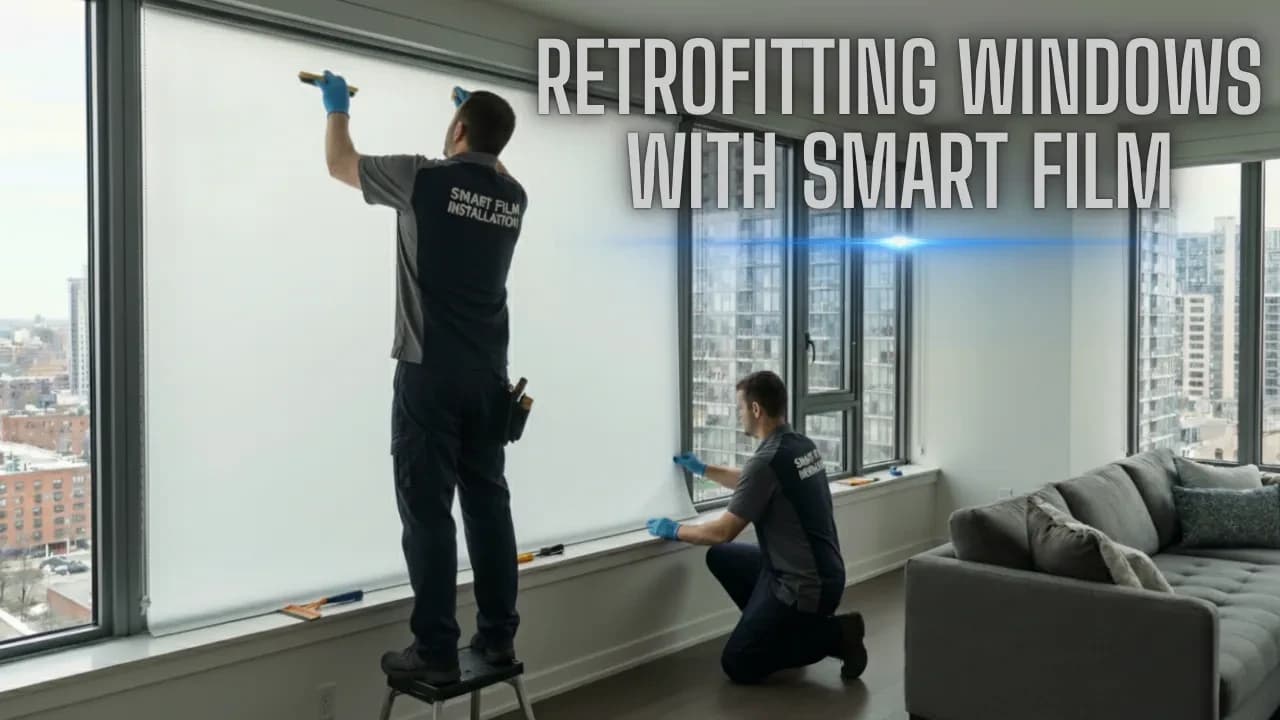
Carefully peel back the protective liner from the film — do not touch the adhesive side. Position the film onto the glass starting from the top edge, then gradually lower it across the surface, keeping it aligned as you go.
Pro Tip: Have a second person assist with larger panels to avoid the film folding onto itself during application.
Step 4: Smooth the Film and Remove Air Bubbles
Once the film is positioned, use a squeegee or soft application card to press the film firmly onto the glass. Work from the centre outward in overlapping strokes, pushing any trapped air or water toward the edges.
Check the entire surface for bubbles or wrinkles. Small remaining bubbles often disappear within 24–48 hours as the adhesive fully cures. Larger bubbles should be addressed immediately by lifting the film slightly from the nearest edge and re-squeegeeing the area.
Pro Tip: Do not use excessive force with the squeegee — firm, steady strokes are more effective than hard pressing.
Step 5: Trim the Edges
Once the film is smooth and properly positioned, use a sharp utility knife and straight edge to trim any excess film along the edges of the glass. Work carefully to keep cuts clean and straight.
Remove any leftover adhesive residue from the glass frame using a clean cloth lightly dampened with glass cleaner.
Step 6: Connect the Electrical System
Smart film requires a low-voltage power connection to function. Most smart film systems come with a transformer and bus bar connectors that attach along the edge of the film.
Follow the manufacturer's wiring instructions carefully. Ensure all connections are secure, properly insulated, and routed safely away from moisture or sharp edges. If you are integrating the film into a smart home system, BMS, or app-controlled setup, consult a qualified electrician for the wiring work.
Pro Tip: Never attempt to connect smart film directly to mains voltage. Always use the correct transformer specified by the manufacturer.
Step 7: Test the Film
Once the electrical connection is in place, power on the system and test the film. The glass should switch from opaque to transparent smoothly and instantly.
Test the full range of controls — switch, remote, or app — to confirm everything is functioning correctly. If the transition is slow, uneven, or incomplete, check all electrical connections before assuming a fault with the film itself.
Common Smart Film Installation Mistakes to Avoid
Mistake
Why It Matters
How to Avoid It
Installing on dirty glass
Causes poor adhesion, bubbles, and lifting
Clean thoroughly before starting
Cutting inaccurately
Results in uneven edges and gaps
Measure twice, cut once on a flat surface
Skipping the slip solution
Film sticks before it is aligned
Always mist the glass before applying
Trapping large air bubbles
Ruins the visual finish
Squeegee from centre outward methodically
Incorrect electrical connections
Film won't function or may be damaged
Follow manufacturer wiring guide exactly
Connecting to wrong voltage
Can damage or destroy the film
Always use the correct transformer
Installing in direct sunlight
Adhesive sets too fast, reduces working time
Work in a cool, shaded space
When to Choose Professional Installation
While smart film installation is manageable for smaller surfaces, professional installation is strongly recommended in the following situations:
Large glass panels — floor-to-ceiling windows, full glass walls
Curved or shaped glass — requires specialist cutting and application
Commercial or high-visibility projects — where a flawless finish is essential
Integrated smart systems — BMS, home automation, or app-controlled setups
Healthcare or hospitality environments — where installation quality directly impacts the guest or patient experience
A certified installer brings the right tools, experience, and warranty backing that DIY installation cannot always guarantee.
Summary
Installing smart film step by step is a straightforward process when approached with the right preparation and attention to detail. Clean glass, accurate cutting, careful application, and correct electrical connection are the four pillars of a successful installation.
For smaller, straightforward projects, a confident DIY approach can deliver excellent results. For larger or more complex installations, professional installation ensures the best long-term outcome and protects your investment.
Want a professional installation in Saudi Arabia? Contact us to discuss your project and get a tailored quote.
Frequently Asked Questions About Smart Film Installation
Can I install smart film myself, or do I need a professional?
Smart film can be installed as a DIY project for smaller glass surfaces if you follow the correct steps carefully. However, professional installation is recommended for large panels, commercial projects, or any installation that involves integration with a smart home or BMS system. A certified installer also ensures the electrical connections are safe and up to standard.
How long does smart film installation take?
For a standard window or glass partition, installation typically takes between 1 and 3 hours depending on the size and complexity. This includes surface preparation, film application, and electrical connection. Larger commercial installations with multiple panels may take a full day or more.
What type of glass is smart film compatible with?
Smart film is compatible with most flat glass types, including:
Single-pane glass
Double-glazed (IGU) units
Tempered glass
Laminated glass
It is not suitable for curved, textured, or wire-reinforced glass. Always confirm compatibility with your supplier before purchasing.
Can smart film be removed after installation?
Yes. Smart film can be removed from glass surfaces, although the process requires care to avoid leaving adhesive residue. Use a heat gun or hair dryer to warm the film and soften the adhesive before peeling. Any remaining residue can be cleaned with an appropriate adhesive remover. Note that removal may not always be possible without minor marks on older or more delicate glass.
What causes bubbles in smart film and how are they fixed?
Bubbles are usually caused by dust on the glass, insufficient use of slip solution, or uneven squeegeeing during application. Small bubbles often disappear within 24–48 hours as the adhesive cures. Larger bubbles should be addressed immediately by carefully lifting the nearest edge of the film and re-applying with a squeegee.
Does smart film installation require an electrician?
The film itself can be installed without an electrician. However, the electrical connection — especially for integrated systems, mains-powered transformers, or smart home setups — should be handled by a qualified electrician to ensure safety and compliance with local wiring regulations in Saudi Arabia.
How do I clean smart film after installation?
Clean smart film with a soft, lint-free cloth and a mild, ammonia-free glass cleaner. Avoid abrasive materials, solvents, or high-pressure sprays, which can damage the film surface or edges. Regular gentle cleaning will maintain clarity and extend the life of the film.
How soon can I use the film after installation?
The film can be powered on and tested immediately after installation. However, the adhesive continues to cure for 24 to 48 hours after application, during which time minor bubbles may still be present. Avoid cleaning or applying pressure to the film during this curing window.