

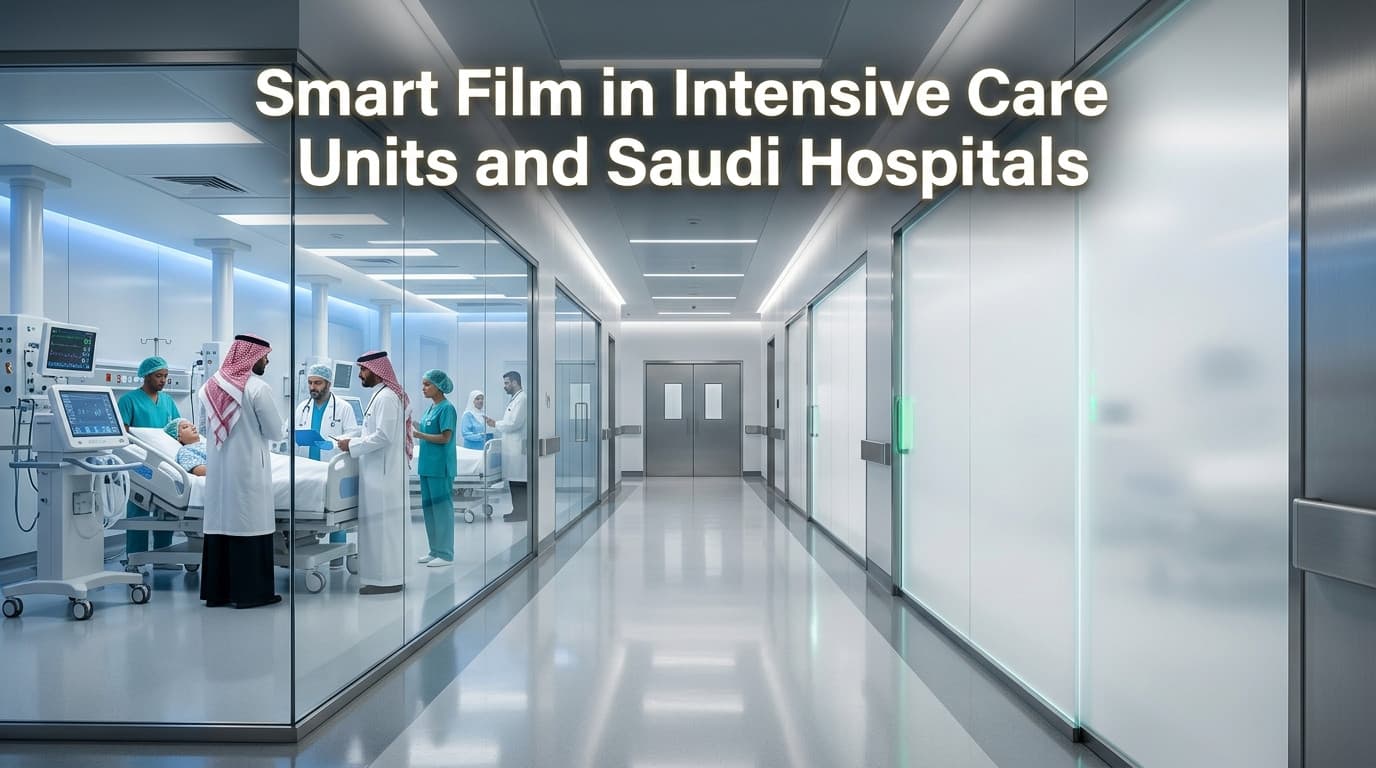
With the rapid development of the healthcare sector in Saudi Arabia, infection control and patient safety standards have become top priorities in the design and operation of hospitals and medical facilities. Among the healthcare elements being reconsidered in recent years are fabric curtains used for patient separation and privacy, due to the hygiene and sterilization challenges associated with textile materials.
Today, many modern hospitals are adopting Smart Film as an advanced alternative to traditional curtains. It provides instant privacy while maintaining superior hygiene standards and supporting infection prevention efforts. In addition, it enhances healthcare environments and helps reduce the risk of contamination within medical facilities.
This article explores the role of Smart Film in intensive care units and hospitals across Saudi Arabia, why it is considered an ideal alternative to traditional privacy solutions, and the benefits it offers for patient room isolation and healthcare quality improvement.
What Is Smart Film Used in Hospitals?
Smart Film is an innovative technology applied to glass surfaces, enabling them to switch from transparent to opaque with the touch of a button. The system utilizes liquid crystal particles embedded within a thin film layer attached to the glass, allowing instant control over privacy levels in medical environments.
When electricity is applied, the glass remains fully transparent. When the power is turned off, the glass becomes opaque, providing immediate privacy without the need for traditional fabric curtains.
Due to its ease of use, modern appearance, and ability to support infection control requirements, Smart Film has become increasingly popular in intensive care units, inpatient rooms, and advanced healthcare facilities.
Why Do Fabric Curtains Present Infection Control Challenges?
Fabric curtains have long been used in hospitals to provide privacy between patients. However, modern infection control studies indicate that textile materials can become reservoirs for bacteria and viruses because of frequent contact by patients, healthcare professionals, and visitors.
In addition, curtains require routine washing and sterilization programs to maintain hygiene standards, leading to ongoing maintenance and operational costs. Delays in cleaning or replacing curtains may increase the risk of contamination and pathogen transmission within healthcare facilities.
Key challenges associated with fabric curtains include:
Accumulation of bacteria and microorganisms on textile surfaces.
Frequent washing and replacement requirements.
High maintenance and operational costs.
Difficulty maintaining continuous sterilization.
Deterioration in appearance over time and repeated use.
For these reasons, hospitals are increasingly seeking safer and more efficient alternatives that maintain privacy without compromising infection control standards.
Smart Film as a Sterile Alternative to Curtains in Intensive Care Units
Intensive Care Units (ICUs) are among the most sensitive areas within any hospital, housing patients who require continuous monitoring and specialized care. As a result, maintaining the highest standards of cleanliness and infection prevention is essential.
Smart Film helps reduce potential contamination sources by eliminating fabric curtains and replacing them with glass surfaces that can be easily cleaned and disinfected using approved medical-grade sanitizers.
Additionally, smart glass enables healthcare professionals to monitor patients when necessary while preserving patient privacy. This creates an ideal balance between clinical accessibility and patient comfort.
The technology also contributes to a cleaner, more organized, and more efficient ICU environment compared to traditional privacy solutions.
Smart Glass for Hospitals: Combining Privacy and Hygiene
Smart glass has become a key element of modern healthcare design because it combines privacy, easy maintenance, and a professional appearance.
Instead of relying on curtains that require regular cleaning and replacement, healthcare staff can control glass transparency within seconds. During examinations or patient monitoring, the glass remains transparent. When privacy is required, it instantly switches to an opaque state.
Smart glass also enhances space utilization and contributes to a contemporary healthcare environment that reflects technological innovation.
Common applications include:
Intensive Care Units (ICUs)
Private patient rooms
Maternity and women's health departments
Consultation and examination rooms
Radiology and imaging centers
Specialty clinics
Administrative offices within hospitals
Patient Room Isolation Using Smart Film
Patient room isolation plays a vital role in improving patient comfort and healthcare quality. Smart Film offers an innovative solution that provides instant visual separation without requiring partitions or traditional curtains.
When the glass switches to opaque mode, visibility is completely blocked while natural light continues to enter the room. This helps improve patient well-being and reduces feelings of confinement.
Smart Film also minimizes dust accumulation and airborne contaminants, making it particularly beneficial for immunocompromised patients or individuals requiring highly controlled environments.
Furthermore, Smart Film systems can be integrated with smart building technologies, enabling centralized privacy management throughout healthcare facilities.
Benefits of Smart Film in Saudi Hospitals
Saudi hospitals are increasingly adopting advanced technologies that support healthcare excellence and align with the objectives of Saudi Vision 2030. Smart Film offers numerous advantages that contribute to these goals.
Enhanced Infection Control
By eliminating fabric surfaces that can harbor contaminants, Smart Film helps maintain a cleaner and safer healthcare environment.
Easy Sterilization
Glass surfaces can be disinfected quickly using approved medical cleaning products without requiring removal or replacement.
Instant Privacy
Patients can enjoy immediate privacy at the touch of a button without relying on traditional curtains.
Improved Interior Design
Smart Film creates a modern and organized appearance that reflects the adoption of advanced healthcare technologies.
Reduced Operational Costs
It minimizes expenses associated with washing, maintaining, and replacing fabric curtains.
Better Patient Experience
A cleaner, quieter, and more comfortable environment contributes to improved patient satisfaction and overall healthcare experiences.
How Does Smart Film Support Smart Hospital Requirements?
Modern smart hospitals rely on technologies that improve operational efficiency and enhance experiences for both patients and healthcare professionals. Smart Film plays an important role in this transformation because it can be integrated with centralized control systems and building management platforms.
The technology can also be programmed to operate automatically according to departmental requirements, helping reduce manual intervention and improve operational efficiency.
As a result, healthcare facilities can achieve higher standards of quality, safety, and innovation while maintaining a healthier environment.
The Difference Between Smart Film and Traditional Curtains
When comparing Smart Film to traditional fabric curtains, several significant advantages become apparent.
Smart Film is easier to clean and disinfect, does not require frequent washing, and does not provide an environment where bacteria and viruses can accumulate as textile materials often do.
It also offers a longer lifespan, a more professional appearance, and instant privacy control without repeated physical contact.
in the end Modern infection control standards and healthcare hygiene requirements are encouraging Saudi hospitals to adopt more advanced alternatives to traditional curtains. Smart Film stands out as one of the most effective solutions by combining instant privacy, easy sterilization, and contemporary design.
As the adoption of smart glass technologies and advanced patient room isolation systems continues to grow, Smart Film is expected to become a fundamental component in the design of future hospitals across Saudi Arabia. Its health, operational, and aesthetic benefits support high-quality patient care while helping healthcare facilities achieve the highest standards of safety and infection control.
Frequently Asked Questions (FAQ)
Is Smart Film suitable for intensive care units?
Yes. Smart Film is an ideal solution for ICUs because it provides instant privacy, supports easy cleaning and disinfection, and helps maintain infection control standards.
What is the difference between Smart Film and fabric curtains in hospitals?
The primary difference is that Smart Film does not contain textile materials that can harbor bacteria and viruses. It is easier to sanitize, requires less maintenance, and offers a more modern appearance.
Does smart glass help improve infection control in hospitals?
Yes. Smart glass reduces the presence of fabric surfaces in healthcare environments and can be quickly disinfected using approved medical cleaning products, helping minimize contamination risks.
Where can Smart Film be installed in hospitals?
It can be installed in intensive care units, inpatient rooms, consultation areas, maternity departments, radiology centers, specialty clinics, meeting rooms, and administrative offices.
Does Smart Film provide complete patient privacy?
Yes. When activated, the glass becomes opaque and prevents visibility from outside while still allowing natural light to enter the room.
Can Smart Film be installed on existing glass?
Yes. In many cases, Smart Film can be applied directly to existing glass surfaces without replacing the glass, making it a practical solution for both new and existing healthcare facilities.
Does Smart Film help isolate patient rooms?
Yes. Smart Film provides visual separation between patients and surrounding areas, improving comfort and privacy without the need for traditional curtains.
Is Smart Film compatible with smart hospital projects in Saudi Arabia?
Absolutely. Smart Film can be integrated with intelligent control systems and building management platforms, making it an excellent choice for modern and smart healthcare facilities throughout Saudi Arabia.