

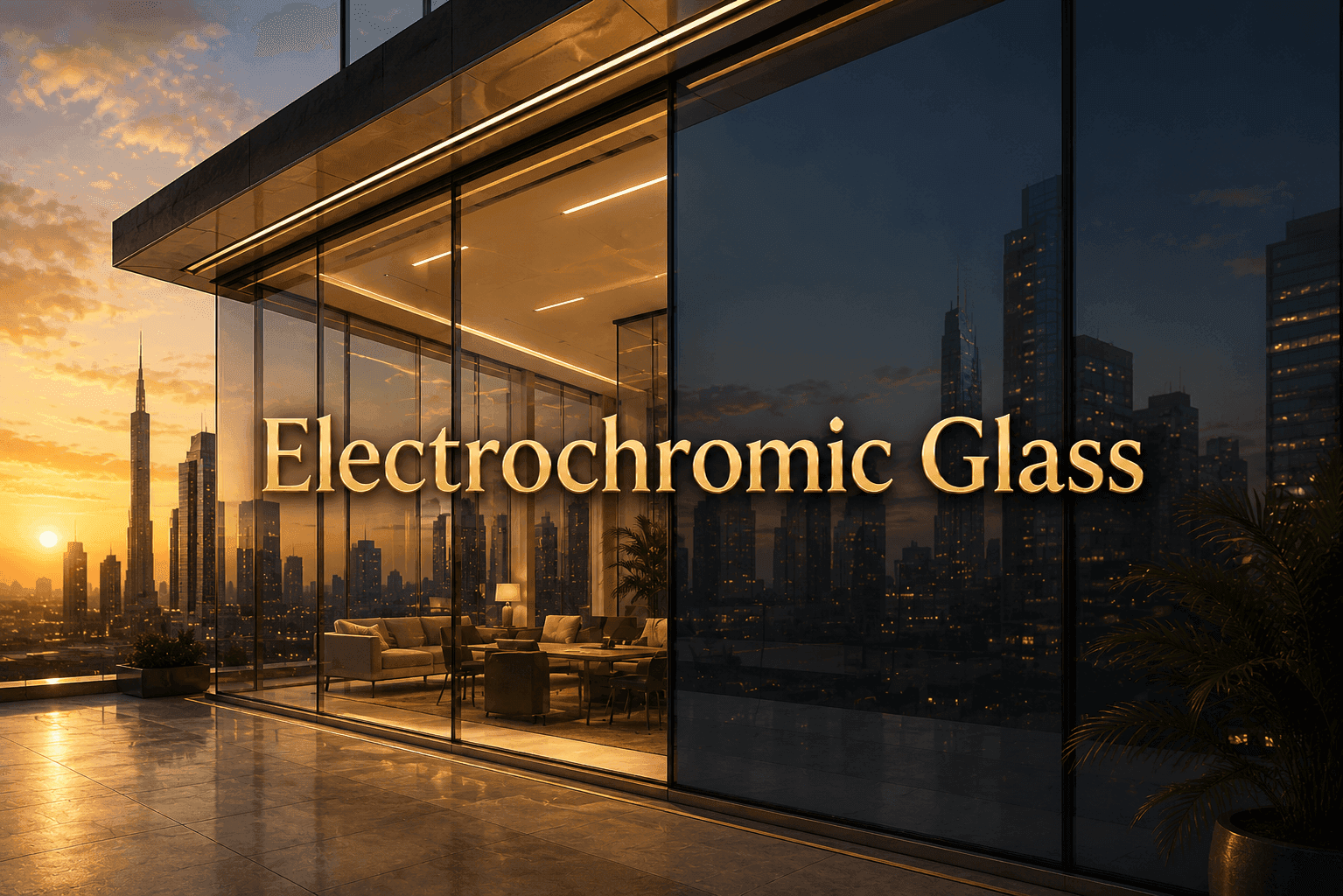
Modern glass technologies have evolved significantly in recent years, and electrochromic glass has emerged as one of the most innovative solutions attracting the attention of architects, developers, and property owners. This advanced technology allows users to control the transparency of glass with the touch of a button, providing greater comfort, improved energy efficiency, and a sleek, modern appearance for buildings.
Electrochromic glass relies on advanced materials that react to electrical currents, changing the glass tint or transparency level when a specific voltage is applied. Thanks to this capability, it has become an ideal solution for modern offices, smart homes, hotels, healthcare facilities, and large glass façades that require effective control over sunlight and heat gain.
What Is Electrochromic Glass and How Does It Work?
Electrochromic glass is a type of smart glass that contains specialized layers capable of changing their optical properties when exposed to a low electrical current. When activated, the glass transitions from a clear state to a darker tinted state, reducing the amount of light and solar heat entering a space.
This process occurs through integrated electrochromic layers within the glass structure. Ions move between these layers when electricity is applied, altering the glass's light transmission properties. Depending on the technology used, the glass can either return to its original state when the power is turned off or maintain the selected tint level.
Benefits of Electrochromic Glass in Modern Buildings
Electrochromic glass offers numerous advantages that make it a smart investment for contemporary buildings, including:
Instant control over natural light levels.
Enhanced privacy without the need for curtains or blinds.
Reduced energy consumption for cooling and lighting systems.
Protection of furniture and interiors from harmful UV rays.
A modern and sophisticated architectural appearance.
Improved comfort for occupants and employees.
For these reasons, smart glass technologies have become an essential component of sustainable construction and green building projects worldwide.
The Difference Between Smart Film and Smart Glass
When searching for privacy and light-control solutions, many people compare smart film and smart glass. While both technologies serve a similar purpose, there are important differences between them.
Smart film is an electronic layer that can be applied to existing glass surfaces, making it a cost-effective and quick installation option. It can switch from transparent to opaque when electricity is applied, without requiring the replacement of the existing glass.
Smart glass, on the other hand, is manufactured with integrated technology embedded directly within the glass panels. It offers superior durability, a longer lifespan, and more consistent long-term performance. Additionally, it provides a more seamless and premium appearance that integrates naturally into architectural designs.
The choice between smart film and smart glass ultimately depends on the available budget, project requirements, and desired performance level.
Modern Glass Technologies Transforming Architecture
Modern glass technologies have become a key element of intelligent building design. Today, glass is no longer limited to providing visibility and natural light; it plays a crucial role in improving building efficiency, comfort, and sustainability.
Some of the most notable innovations include:
Switchable Smart Glass
This technology enables glass to switch between transparent and opaque states within seconds, making it widely used in conference rooms, offices, and healthcare facilities.
Electrochromic Glass
Electrochromic glass gradually adjusts its tint level to control the amount of sunlight and heat entering a building.
Energy-Efficient Insulated Glass
Designed to reduce heat transfer between indoor and outdoor environments, this glass helps lower overall energy consumption.
Solar Smart Glass
This innovative technology combines traditional glazing with solar energy generation, making it one of the most promising developments in sustainable architecture.
Applications of Electrochromic Glass in Homes and Offices
Electrochromic glass has become increasingly popular across a wide range of applications due to its flexibility, convenience, and privacy-enhancing capabilities.
In residential properties, it is commonly used for large windows, glass façades, living spaces, and luxury bathrooms. In office environments, it is frequently installed in meeting rooms, glass partitions, and executive offices.
Hotels also utilize electrochromic glass to improve guest comfort and privacy, while healthcare facilities use it as a hygienic alternative to curtains and traditional privacy solutions that require frequent maintenance and cleaning.
Does Electrochromic Glass Really Save Energy?
Improving energy efficiency is one of the primary reasons organizations and investors choose electrochromic glass. By reducing the amount of solar heat entering a building during daylight hours, the need for air conditioning can be significantly reduced.
Additionally, electrochromic glass maximizes the use of natural daylight while minimizing glare, reducing dependence on artificial lighting. As a result, buildings can achieve substantial long-term savings on energy costs, particularly those with extensive glass façades.
Is Electrochromic Glass Worth the Investment?
Although electrochromic glass typically costs more than conventional glass, its long-term benefits often justify the initial investment. Reduced energy consumption, lower reliance on blinds and shading systems, and increased property value all contribute to a favorable return on investment.
Furthermore, continuous advancements in manufacturing technologies have made these solutions more accessible and cost-effective than ever before.
Does Electrochromic Glass Improve Energy Efficiency?
Energy savings remain one of the most attractive advantages of electrochromic glass. By controlling the amount of sunlight and heat entering interior spaces, this technology helps reduce cooling demands during warmer months.
It also enhances the use of natural daylight without creating excessive glare or heat buildup, reducing the need for artificial lighting throughout the day. Consequently, commercial and residential buildings can benefit from improved energy performance and lower operating costs over time.
Electrochromic Glass Cost and Factors Affecting Pricing
The cost of electrochromic glass varies depending on several technical and project-specific factors. Pricing is influenced by the size of the glass panels, the technology employed, the required tinting performance, and the desired thermal insulation properties.
Installation complexity, integrated control systems, and overall project requirements also play significant roles in determining the final cost. While electrochromic glass may involve a higher upfront investment compared to traditional glazing solutions, its long-term benefits in energy savings, comfort, and aesthetics make it a valuable addition to modern buildings.
Why Are Architects Choosing Smart Glass?
Smart glass has become an essential element of modern architectural design because it successfully combines aesthetics and functionality. Architects and designers increasingly favor smart glass solutions because they provide flexible control over privacy and natural light without compromising the visual appeal of a building.
In addition, smart glass supports sustainability goals and energy-efficiency standards that are now central to many construction projects. Its ability to create innovative, technology-driven spaces makes it an ideal choice for residential, commercial, hospitality, and healthcare developments seeking enhanced comfort and modern design.
Would You Like to Upgrade Your Home or Project Using Smart Glass?
Smart View provides comprehensive smart glass and smart film solutions, including supply, installation, and technical consultation services for residential, commercial, and administrative projects. We rely on the latest technologies to deliver the highest standards of quality, performance, and innovation.
Whether you are planning to renovate your home or enhance your commercial project, choosing the right smart glass technology can make a significant difference in both functionality and everyday comfort.
To learn more about our smart glass solutions, visit our website
in the end Electrochromic glass represents a significant advancement in modern glass technologies, combining architectural beauty, intelligent functionality, and energy efficiency. Whether for a smart home, commercial development, healthcare facility, or hospitality project, this innovative solution offers effective control over light, privacy, and indoor comfort while reducing energy consumption.
As smart building technologies continue to evolve, electrochromic glass is expected to become a standard feature in the architecture of the future.
Frequently Asked Questions (FAQs) About Electrochromic Glass
What is electrochromic glass?
Electrochromic glass is a type of smart glass that can change its tint level when an electrical current is applied. It allows users to control the amount of light, glare, and heat entering a building while maintaining outdoor views.
How does electrochromic glass work?
The technology uses specialized electrochromic layers embedded within the glass. When a low voltage is applied, ions move between these layers, causing the glass to darken or become more transparent depending on the desired setting.
What is the difference between electrochromic glass and smart film?
Electrochromic glass has the technology integrated directly into the glass unit, offering greater durability and long-term performance. Smart film is applied to existing glass surfaces and is generally a more affordable retrofit solution.
Does electrochromic glass save energy?
Yes. By reducing solar heat gain and controlling daylight levels, electrochromic glass can lower the demand for air conditioning and artificial lighting, helping improve overall building energy efficiency.
Where is electrochromic glass commonly used?
It is widely used in office buildings, residential properties, hotels, hospitals, airports, educational facilities, and commercial developments that require flexible privacy and daylight control.
Is electrochromic glass suitable for residential homes?
Absolutely. Homeowners use electrochromic glass in windows, skylights, glass façades, bathrooms, and living spaces to enhance privacy, comfort, and energy efficiency.
How long does electrochromic glass last?
High-quality electrochromic glass systems are designed for long-term performance and can last for many years when properly installed and maintained.
Is electrochromic glass more expensive than traditional glass?
Yes, the initial cost is typically higher than conventional glass. However, the long-term benefits, including energy savings, reduced maintenance, and improved occupant comfort, often justify the investment.
Can electrochromic glass block UV rays?
Yes. Most electrochromic glass systems help reduce harmful ultraviolet (UV) radiation, protecting furniture, flooring, artwork, and interior finishes from fading.
Why is electrochromic glass becoming popular in modern architecture?
Architects and designers favor electrochromic glass because it combines aesthetics, sustainability, energy efficiency, and user comfort, making it an ideal solution for modern smart buildings.